based on the water alone
On October 26, 2026, a new hot spring rating called Yuchelin named its first three-star onsen. It ignores food, rooms and fame and judges only the water you actually bathe in. Here are all 21.
This article contains no affiliate links. It is based on Yuchelin’s facility pages and press releases, and the photos come from the Yuchelin site and press materials (checked ). Opening hours and rules change, so check each facility before you go.
If you have seen people talking about Japan’s new “three-star onsen”, this is the list. Yuchelin (湯シュラン; “yu” means hot water in Japanese) is a rating created in October 2026 by a Japanese general incorporated association of the same name. Its first award ceremony, the Yuchelin Award 2026, took place on October 26.
It has nothing to do with Michelin. What makes it different is that it rates only the water delivered to the bath. Food, rooms, service and reputation do not count. Three stars means “a bathing experience that could change your life”, and many of the 21 are remote springs, traditional toji (healing) inns and community baths rather than luxury ryokan.
- Yuchelin is run by the general incorporated association Yuchelin, backed by Japan’s Ministry of the Environment, Japan Tourism Agency and Japan Travel and Tourism Association.
- What it rates: the water in the bath, scored on five criteria. Facilities pay nothing.
- The 21 three-star baths include Japan’s most acidic spring (pH 1.09), a spring with crude oil and one of the strongest carbonated springs.
- Not a ranking: one- and two-star ratings start in 2027.
- Local rules matter: many are community baths with rules on photos, soap and swimwear.
How Yuchelin works
Yuchelin is run by a general incorporated association based in Minato, Tokyo. It announced the rating system on October 5, 2026 and named its first three-star baths on October 26. Its supporters are the Ministry of the Environment, the Japan Tourism Agency and the Japan Travel and Tourism Association.
The starting idea is that the water you sit in is shaped not only by the source but by how it reaches the bath: distance, time, temperature control and daily care. So “kakenagashi” (free-flowing source water) is not treated as the only standard; the whole path from source to tub is judged.
- Not a ranking: the 21 are listed north to south, and places not chosen are not considered worse.
- Year one: baths that are especially rare and easy to appreciate with all five senses were chosen as model cases; more will be added.
- No fees: no review, certification or registration fees. Funding (crowdfunding, sponsors) is kept separate from the ratings.
- With the facility’s consent: Yuchelin asks visitors not to overwhelm the baths and their communities.
The five criteria
Yuchelin uses a food analogy: the source is “a fish swimming in the sea” and the bath water is “the fish dish served at the table”. Even great fish tastes different depending on transport, freshness and cooking.
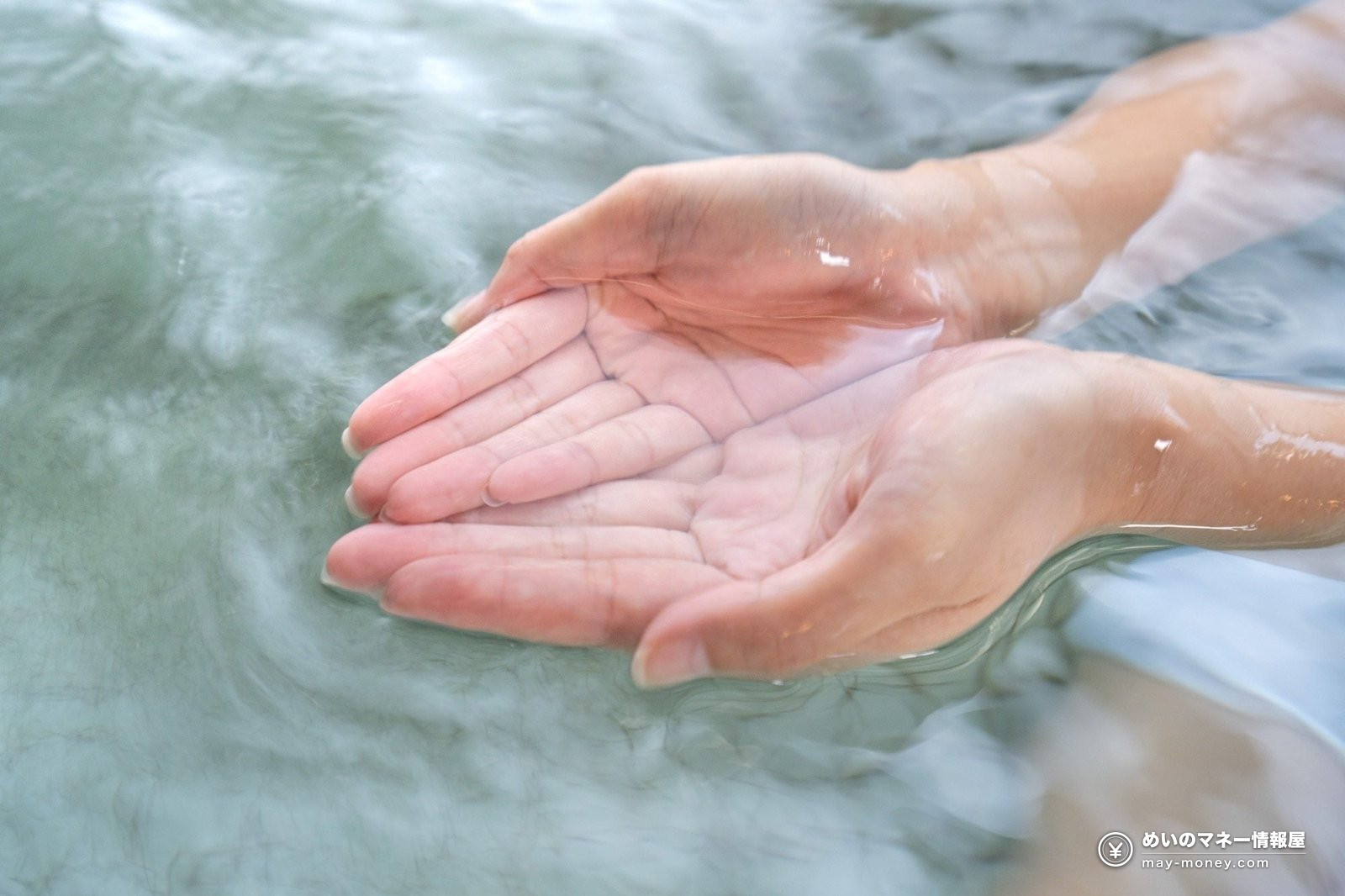
Inspectors first collect mineral analyses and facility data, then visit to check the water, how it is delivered and how it is kept. An evaluation committee scores the results on shared criteria. A council of experts in hot spring science, medicine, history and tourism oversees the system but takes no part in individual reviews.
All 21 three-star baths
In the official north-to-south order. Photos and details for each follow by region.
| No. | Prefecture | Facility | Japanese name |
|---|---|---|---|
| 01 | Hokkaido | Noboribetsu Onsen Daiichi Takimoto-kan | 登別温泉 第一滝本館 |
| 02 | Hokkaido | Toyotomi Onsen, Toyotomi Town Fureai Center (Toji-yu) | 豊富温泉 豊富町ふれあいセンター(湯治湯) |
| 03 | Hokkaido | Obihiro Onsen Roma no Izumi (family baths) | 帯広温泉 ローマの泉(家族風呂) |
| 04 | Akita | Tamagawa Onsen | 玉川温泉 |
| 05 | Iwate | Kunimi Onsen Ishizuka Ryokan | 国見温泉 石塚旅館 |
| 06 | Yamagata | Zao Onsen Sunoko no Yu Kawaraya | 蔵王温泉 すのこの湯 かわらや |
| 07 | Gunma | Hoshi Onsen Chojukan (Hoshi-no-Yu) | 法師温泉 長寿館(法師乃湯) |
| 08 | Tochigi | Kitsuregawa Onsen Soutome Onsen | 喜連川温泉 喜連川 早乙女温泉 |
| 09 | Yamanashi | Narada Onsen Shiranekan | 奈良田温泉 白根館 |
| 10 | Nagano | Kagai Onsen Ichiyokan | 加賀井温泉 一陽館 |
| 11 | Nagano | Okutateshina Onsen Shibu Tatsuno-kan | 奥蓼科温泉 渋・辰野館(信玄の薬湯・森の温泉) |
| 12 | Niigata | Niitsu Onsen | 新津温泉 |
| 13 | Hyogo | Arima Onsen Kamiobo | 有馬温泉 上大坊 |
| 14 | Wakayama | Hanayama Onsen Yakushi no Yu | 花山温泉 薬師の湯 |
| 15 | Tokushima | Iya Onsen, Hotel Iya Onsen | 祖谷温泉 和の宿 ホテル祖谷温泉(渓谷の湯・せせらぎの湯・やまぎりの湯) |
| 16 | Oita | Shichirida Onsenkan Shitan-yu | 七里田温泉館 下ん湯 |
| 17 | Oita | Tsukahara Onsen Kako no Izumi | 塚原温泉 火口乃泉 |
| 18 | Oita | Beppu Onsen Hoyo Land | 別府温泉保養ランド |
| 19 | Kumamoto | Takenoyu Onsen Hourei no Yu | 岳の湯温泉 豊礼の湯 |
| 20 | Kumamoto | Jigoku Onsen Seifuso | 地獄温泉 青風荘 |
| 21 | Kagoshima | Onoaida Onsen | 尾之間温泉 |
Hokkaido and Tohoku (6)
Hokkaido brings rarities like water with crude oil and coffee-colored moor spring; Tohoku has Japan’s most acidic spring at Tamagawa and the emerald water of Kunimi.
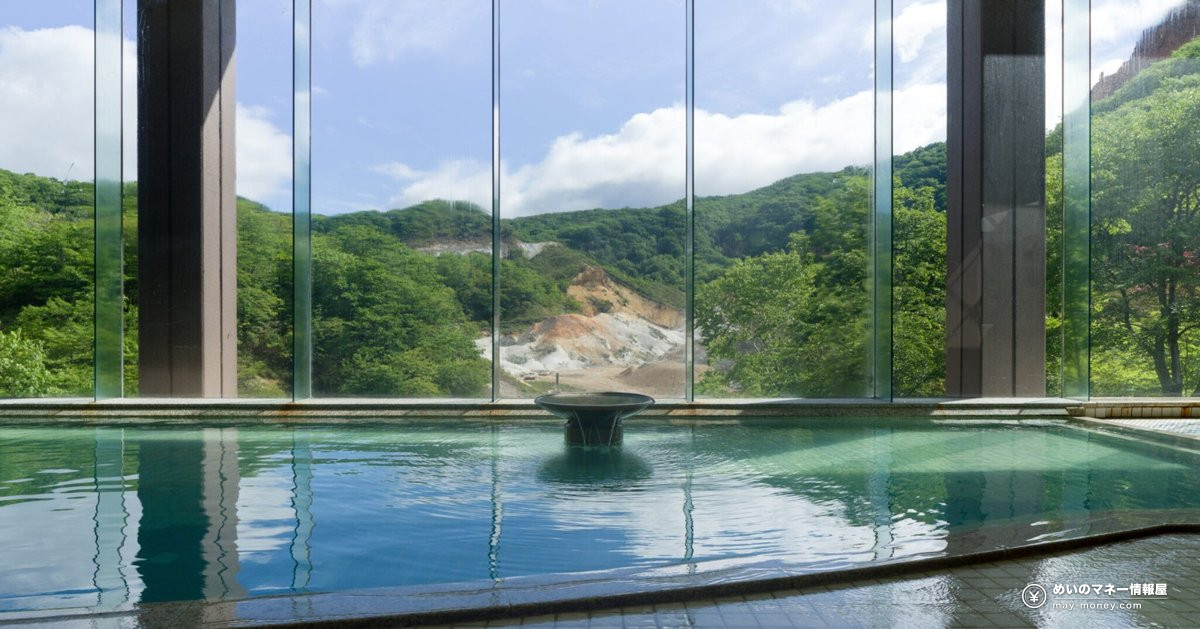
Right next to Jigokudani (Hell Valley), it offers seven sources and five spring types under one roof, from strongly acidic pH 2.2 to neutral pH 7.4. The Manbyo-no-Yu bath is cooled naturally with a water wheel and shelves instead of adding water.
- pH 2.2–7.4 · 48.7–96.5℃
- Source: Natural, pumped and drilled (7 sources)
- Served: Free-flowing, water added, not heated
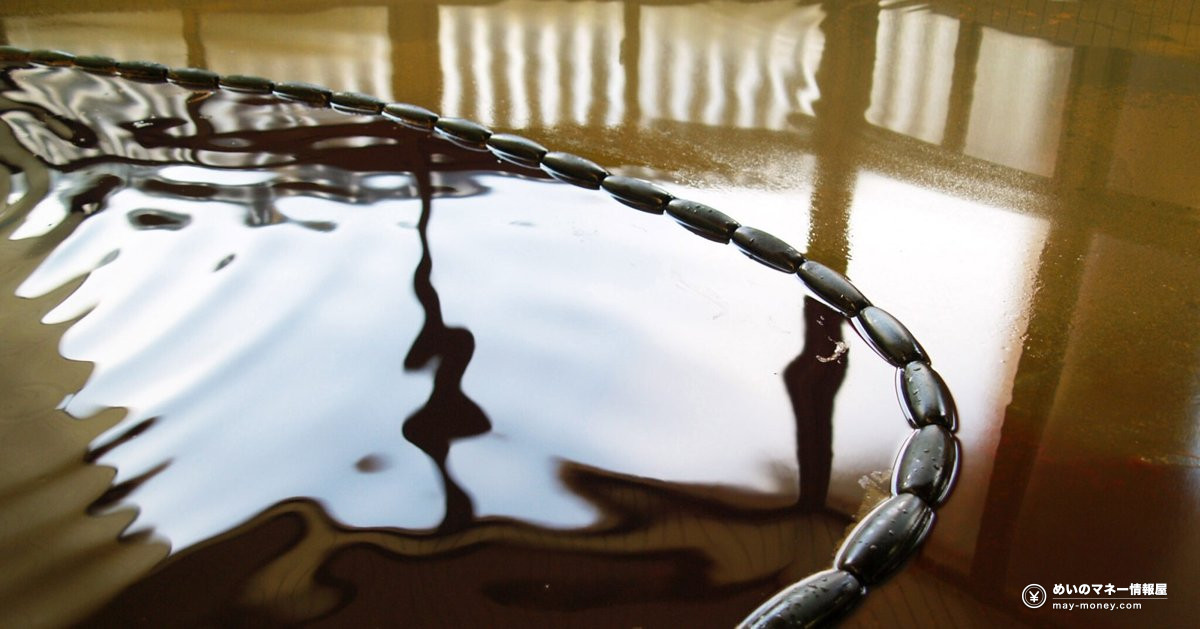
Discovered while test-drilling for oil and gas, this spring carries crude oil, which is extremely rare worldwide. Expect a strong petroleum smell, an oily film on the yellow-brown water and pump bottles of crude oil you can rub on your skin.
- pH 7.5 · 34.2℃
- Source: Pumped (mixed)
- Served: Free-flowing, no water added, heated
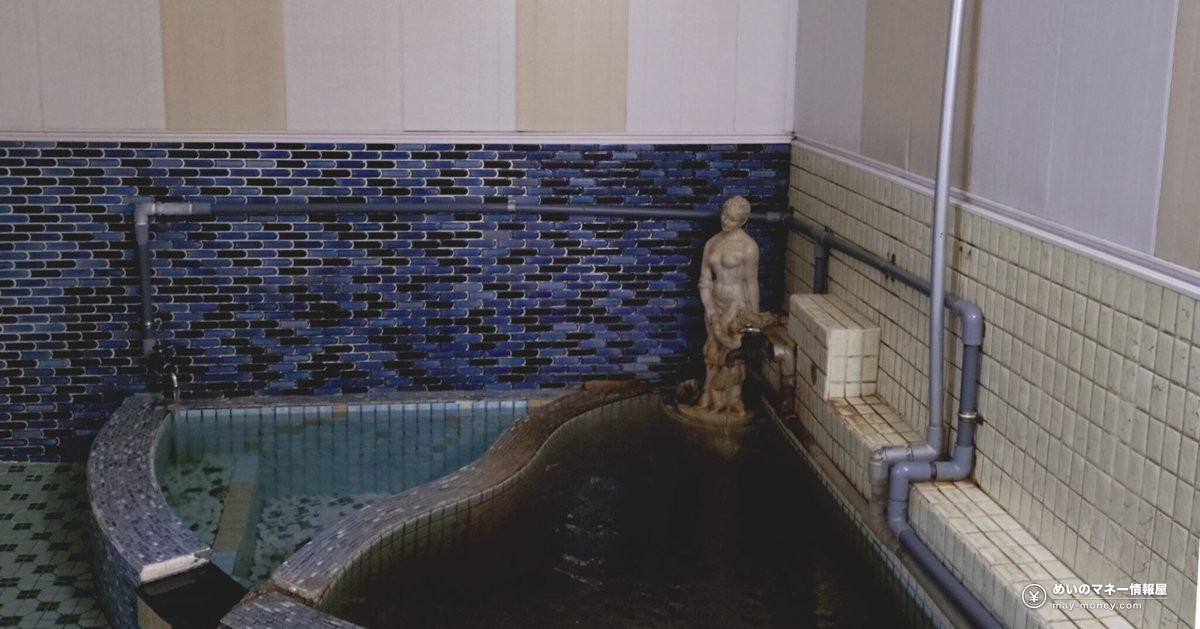
A moor spring (moor-sen) in Obihiro, Tokachi, rich in humic matter from ancient plants. The water is as dark as coffee, with moor, oily and sulfur notes and a layer of tiny white bubbles. The 40°C source flows into private baths with no water or heat added.
- pH 8.6 · 40.9℃
- Source: Pumped
- Served: Free-flowing, no water or heat added
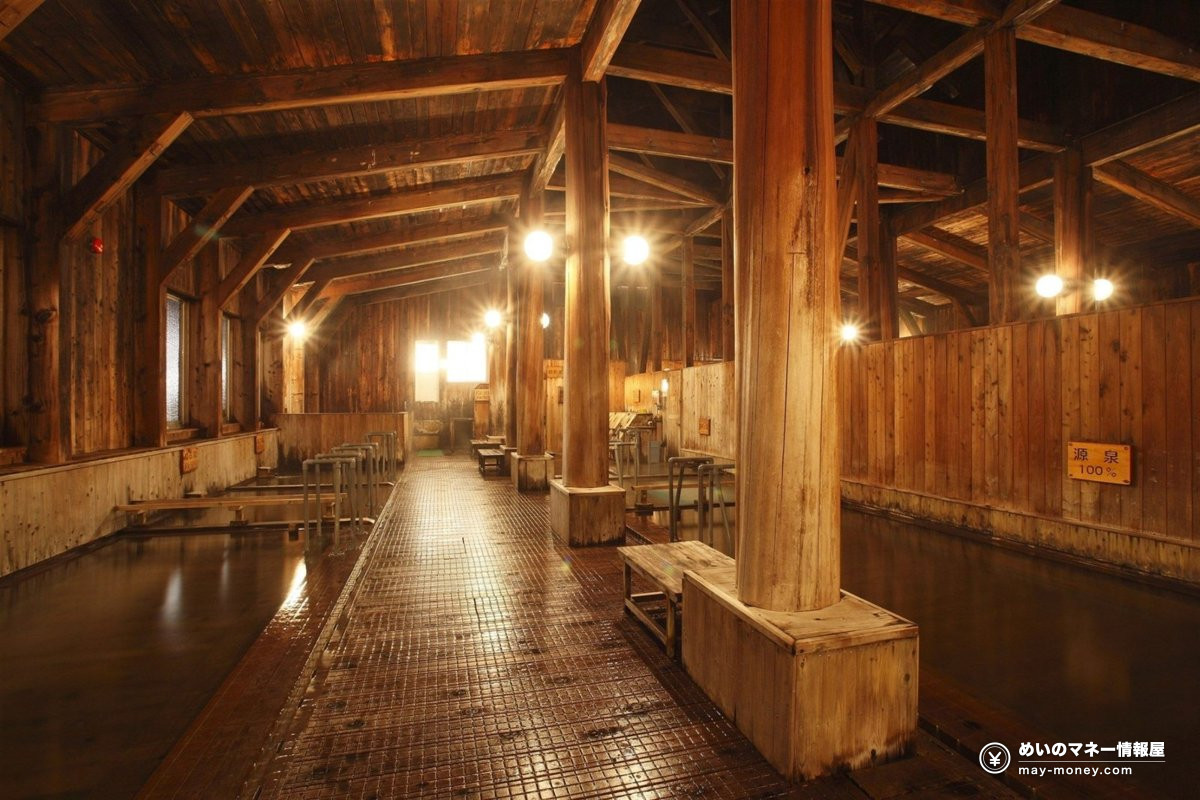
Japan's most acidic spring at pH 1.09, and a rare hydrochloric type: your skin stings when you get out. Baths come in 100%, 50% and mildly acidic strengths, and a walking path leads to the Obuke source, which gushes 9,000 liters a minute.
- pH 1.09 · 97.8℃
- Source: Natural
- Served: Free-flowing; diluted except in the 100% bath
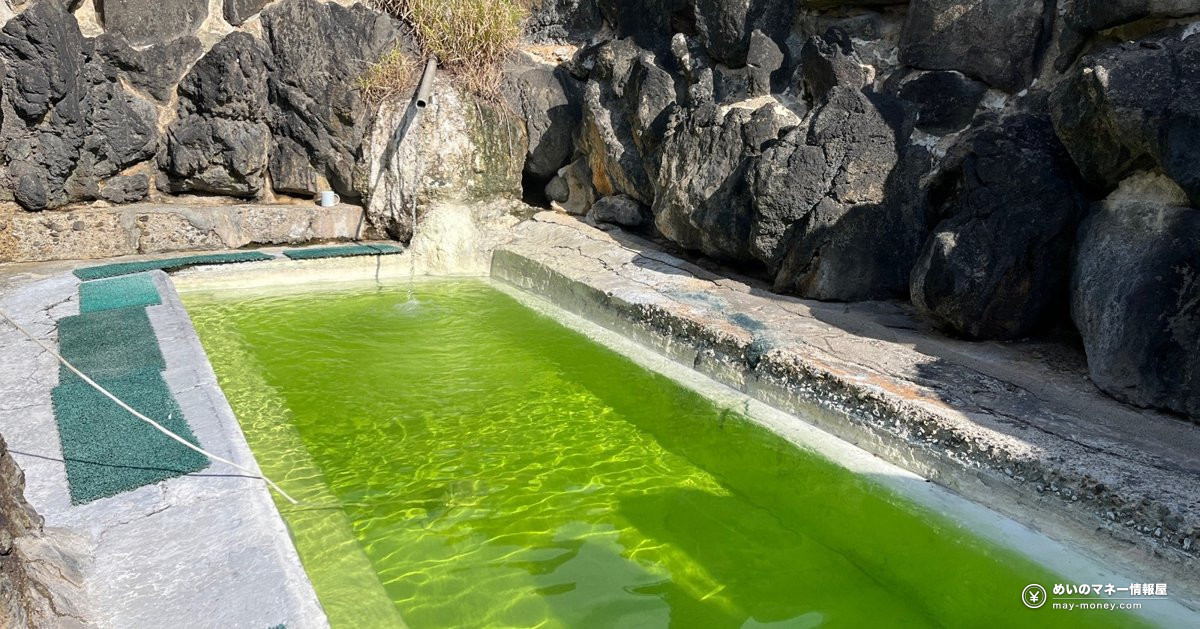
Emerald or lime-green water, so vivid you might think bath salts were modeled on it. The color is said to come from light scattering off calcium polysulfide and calcium carbonate particles. Sulfur and a petroleum-like aroma, slippery feel, and the water is drinkable.
- pH 6.9 · 49.7℃
- Source: Drilled, flows by itself
- Served: Free-flowing, no water or heat added
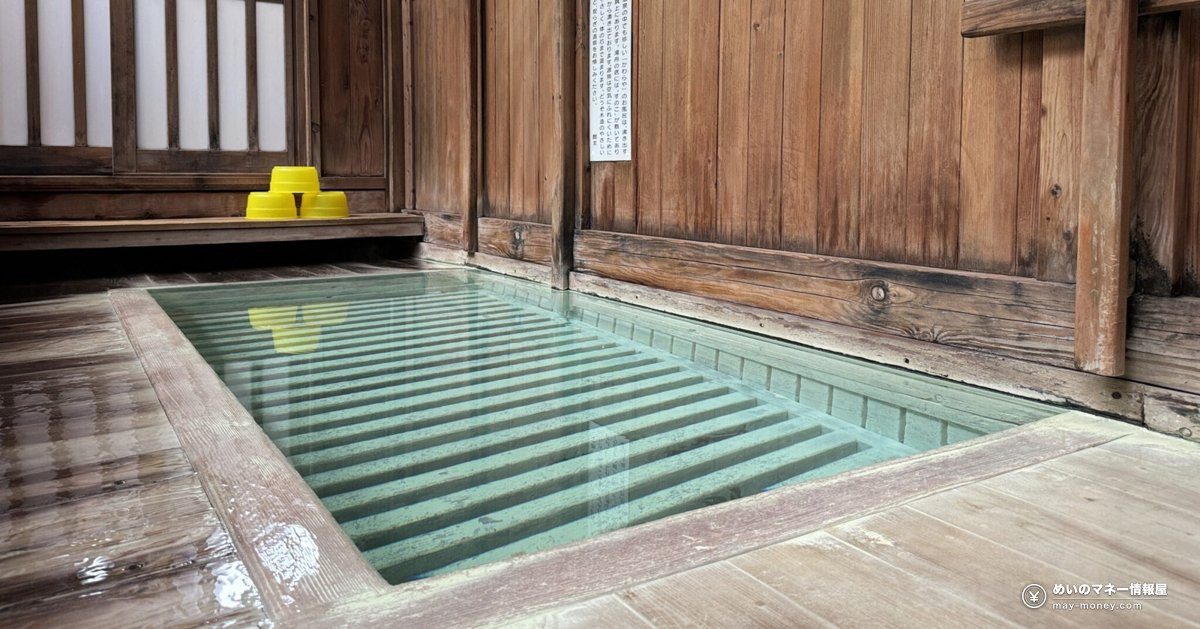
Zao's strongly acidic water rises straight up under you. The bath floor is a large wooden slatted board (sunoko), and the source wells up between the slats. The water is clear enough to see the boards, with an acidic tingle and a sulfur smell.
- pH 1.8 · 50.4℃
- Source: Natural, wells up from the bath floor
- Served: Free-flowing, water added, not heated
Kanto and Koshinetsu (6)
Hoshi Onsen in Gunma bubbles up through the bath floor; Nagano has one bath that turns brown in the air and one fed by a cold mineral waterfall; Niigata has a spring that smells of petroleum.
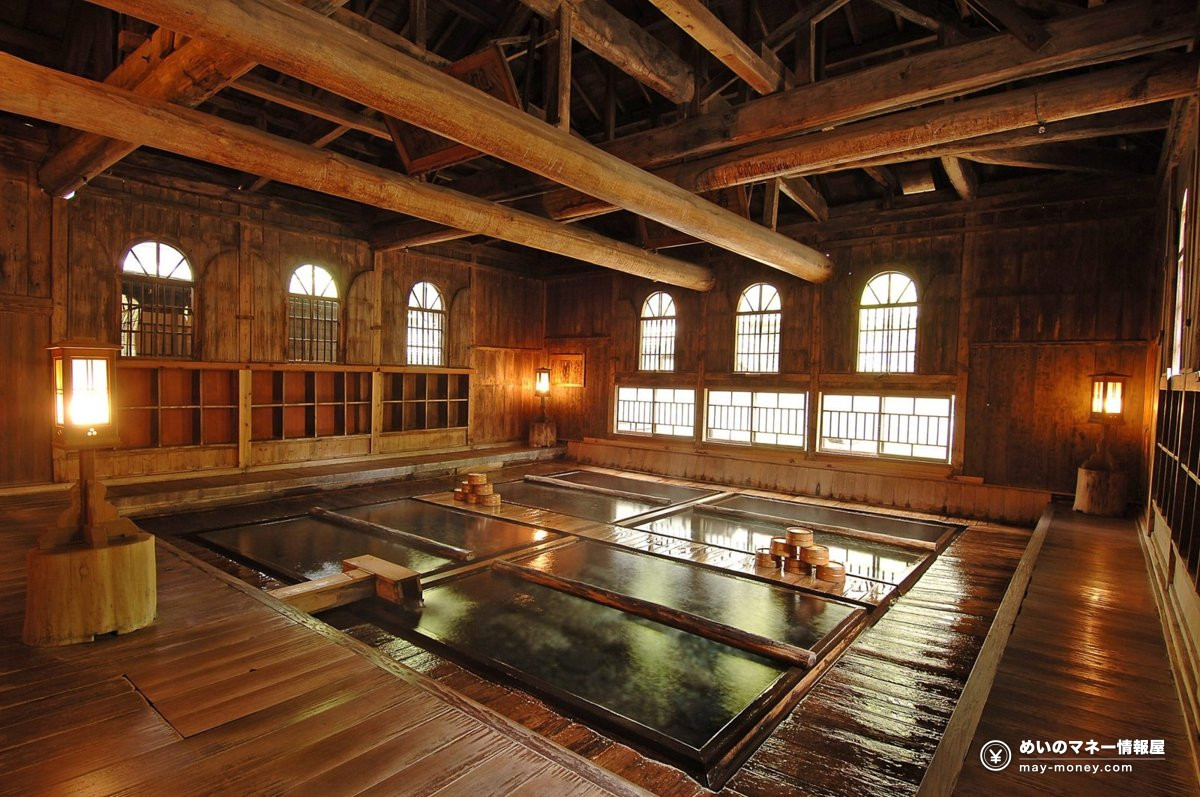
A wooden bathhouse built in 1895 (Meiji 28) and registered as a Tangible Cultural Property. At about 42°C, the water bubbles up between the stones on the bath floor. The bath is split into four sections, each with slightly different springs and bubbles.
- pH 8.5 · 42.1℃
- Source: Natural, wells up from the bath floor
- Served: Free-flowing, no water or heat added
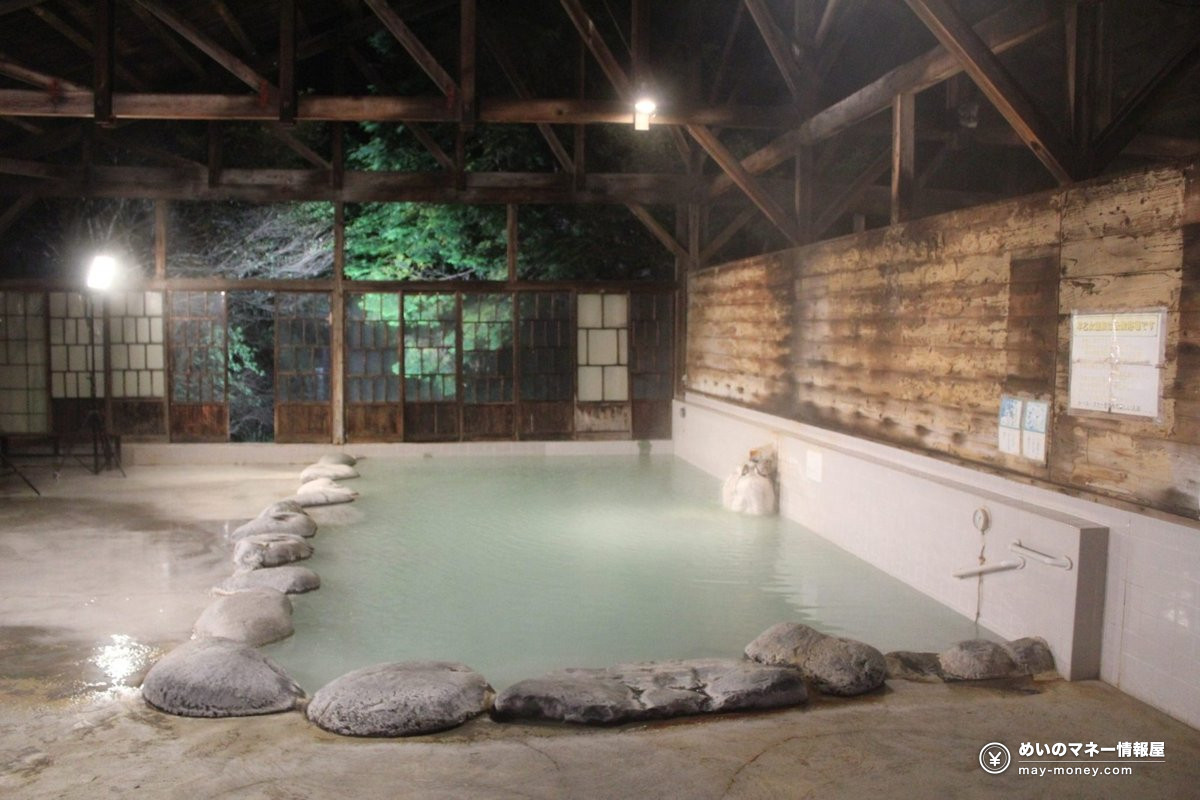
Sulfur at about ten times the sulfur-spring threshold and salt at about ten times the onsen threshold, with a petroleum-like aroma. The color shifts between bright green and milky white. The semi-outdoor rock bath for about 20 people is cleaned and refilled every morning.
- pH 7.4 · 72.4℃
- Source: Pumped
- Served: Free-flowing, water added, not heated
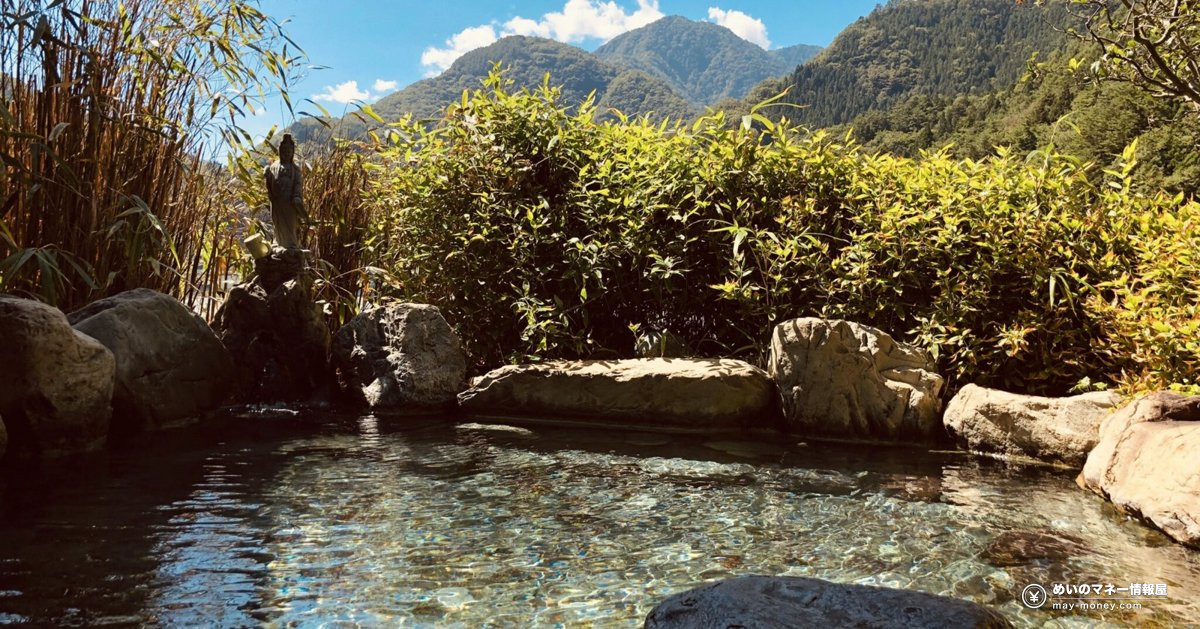
Some of the slipperiest water in Japan, like wearing a layer of face cream. Strong sulfur with a sharp ammonia note; drinking it tastes salty and eggy. The color changes daily, and the outdoor bath uses blue stones from the gorge.
- pH 9.0 · 47.9℃
- Source: Pumped
- Served: Free-flowing, no water added, heated
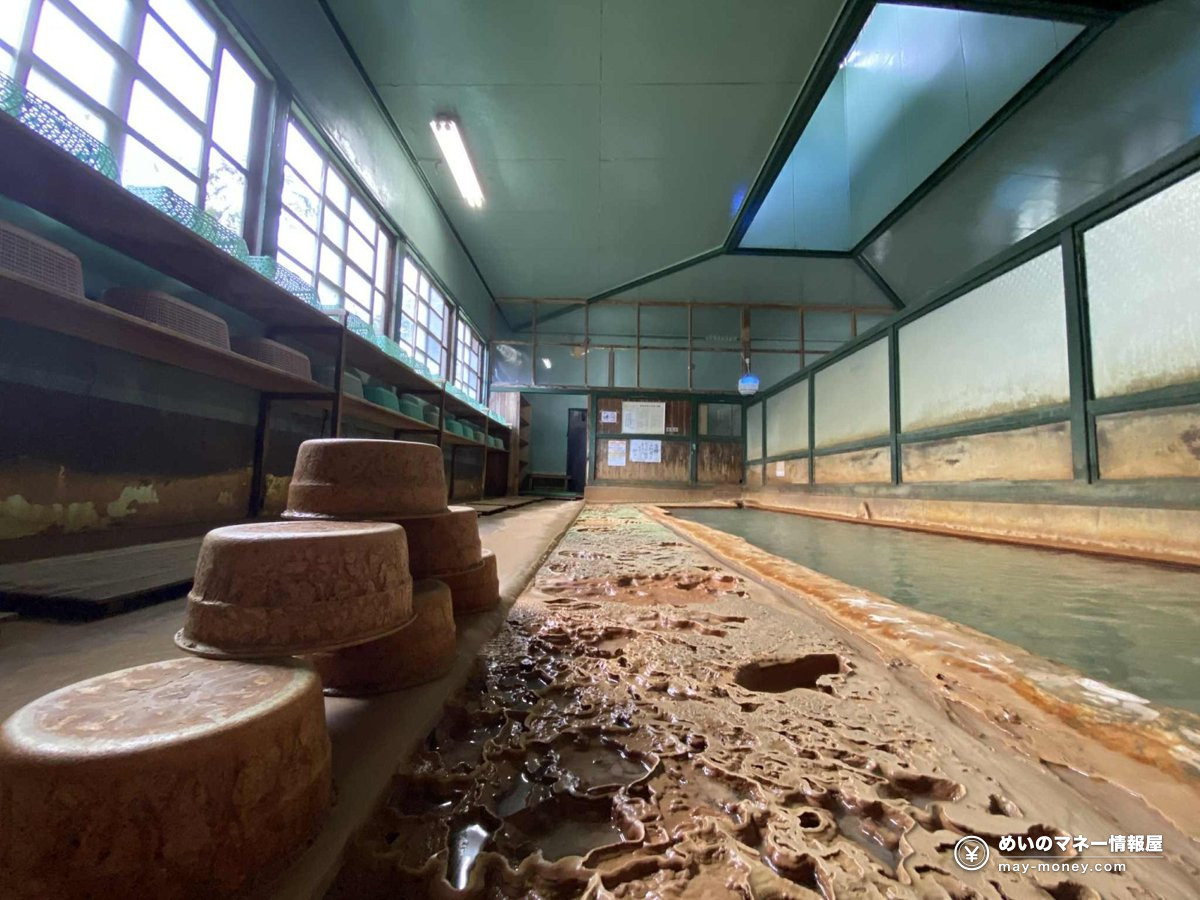
The indoor and outdoor baths use different sources. The water comes out clear and turns deep brown as the iron oxidizes. Carbon dioxide, iron, salt and bitterness are all intense, and mineral deposits coat the tubs and floor. The outdoor bath is a gentle 38°C or so.
- pH 6.3 · 36.4–39.7℃
- Source: Natural
- Served: Free-flowing, no water added, heated
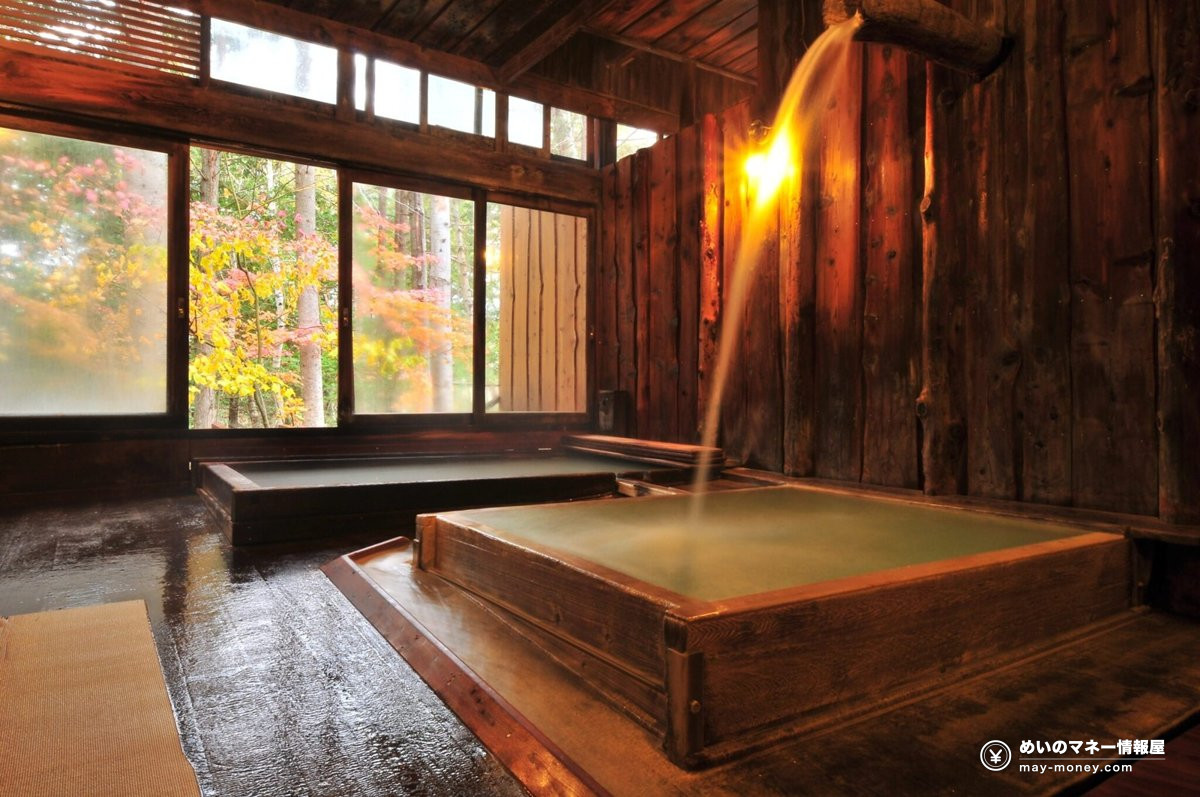
Cold 21°C spring water pours into the source bath like a waterfall; you feel the rumble in your body. White mineral flakes float everywhere, and a sip tastes fizzy, slightly bitter and sour, like a light lemon sour. A heated bath next to it lets you alternate hot and cold.
- pH 2.71 · 21.2℃
- Source: Natural
- Served: Free-flowing, no water added; heated only in the warm bath
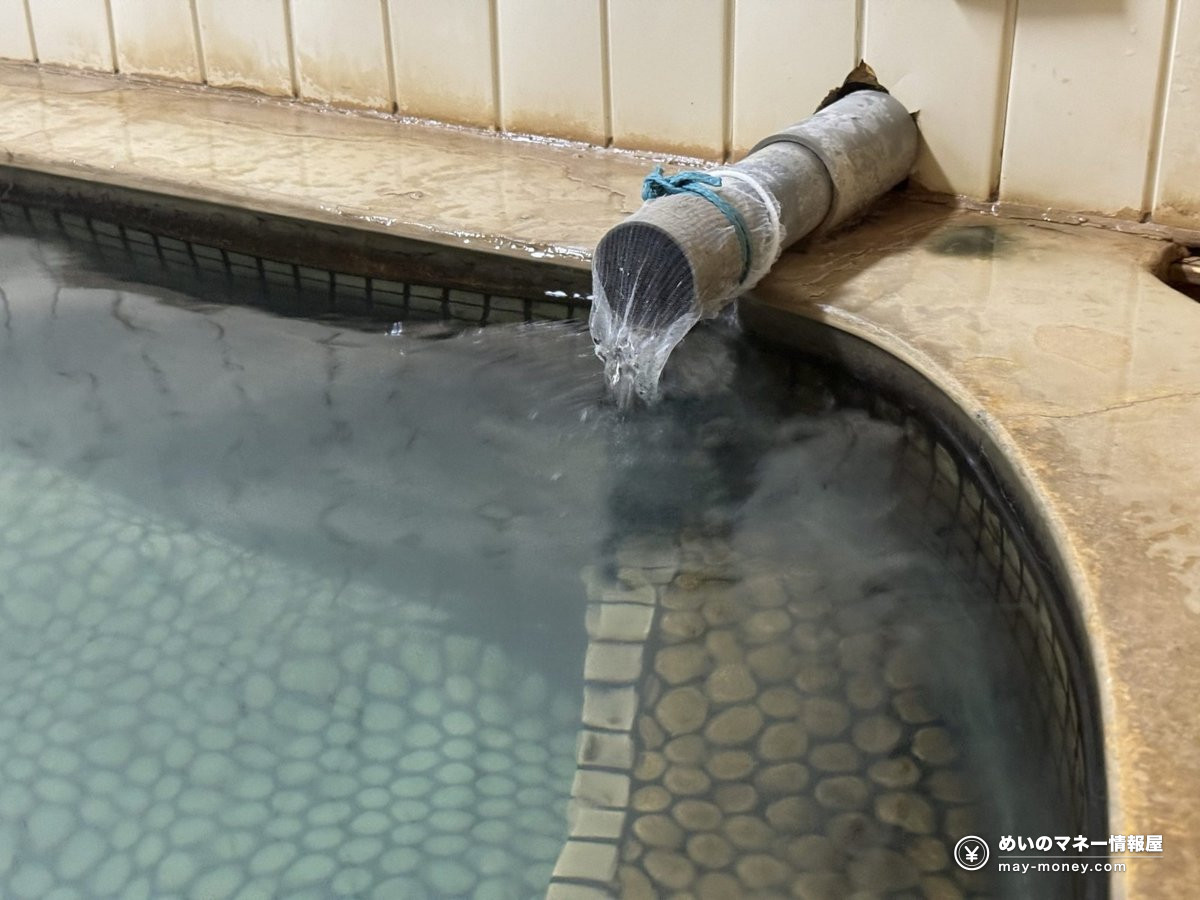
Born from oil-field drilling and loved by locals. Near the building it smells like a gas station, and the water pouring from a PVC pipe has a rich oily aroma and a silky feel. Salt and an oil film leave your skin very moisturized. About every three to four months it erupts like a geyser.
- pH 7.6 · 43.8℃
- Source: Drilled, flows by itself
- Served: Free-flowing, water added in winter only, not heated
Kinki and Shikoku (3)
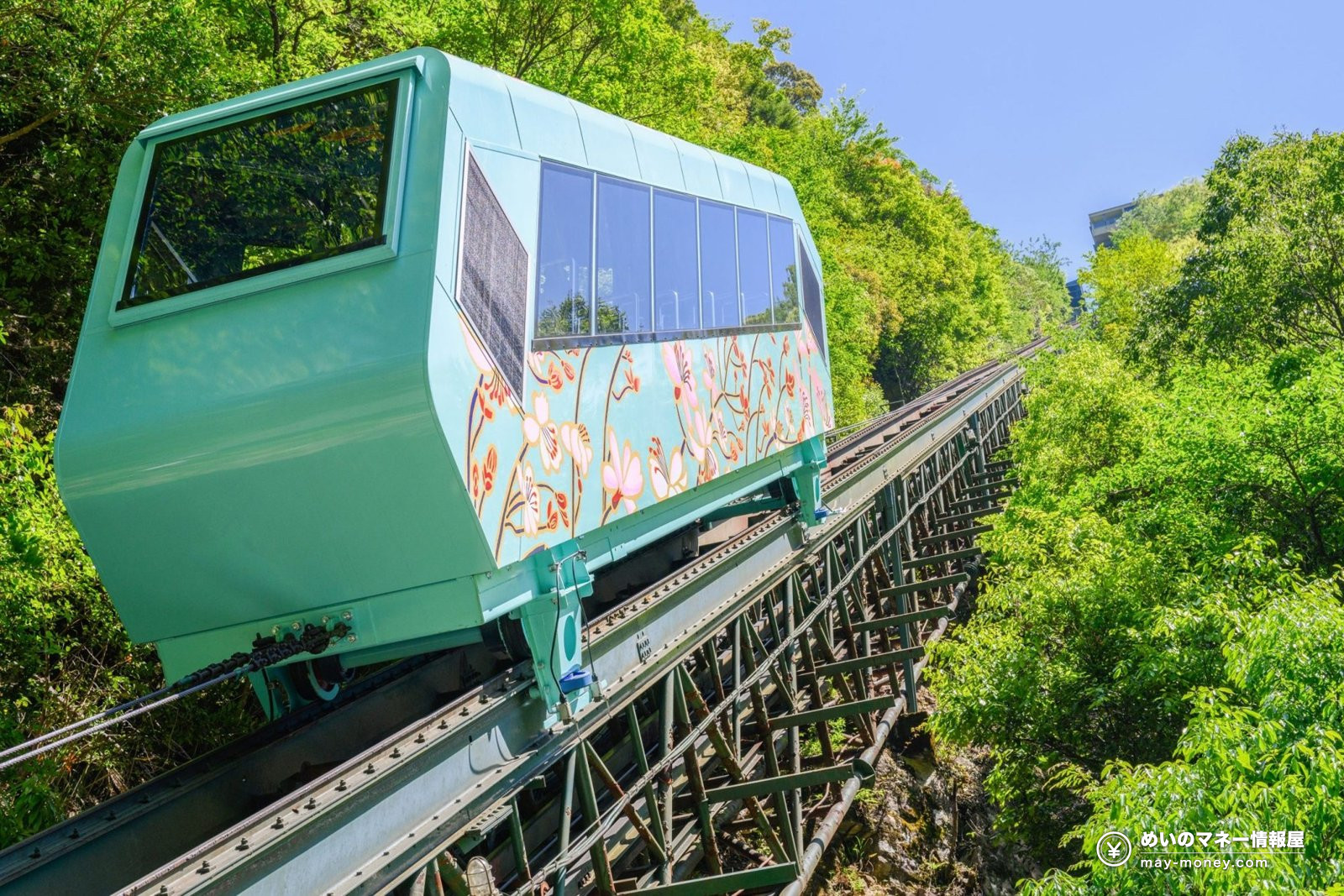
Arima’s famous “gold” water is as dark as red miso soup here, Wakayama’s spring rises on carbon dioxide pressure, and at Iya in Tokushima you ride a cable car down to the bath.
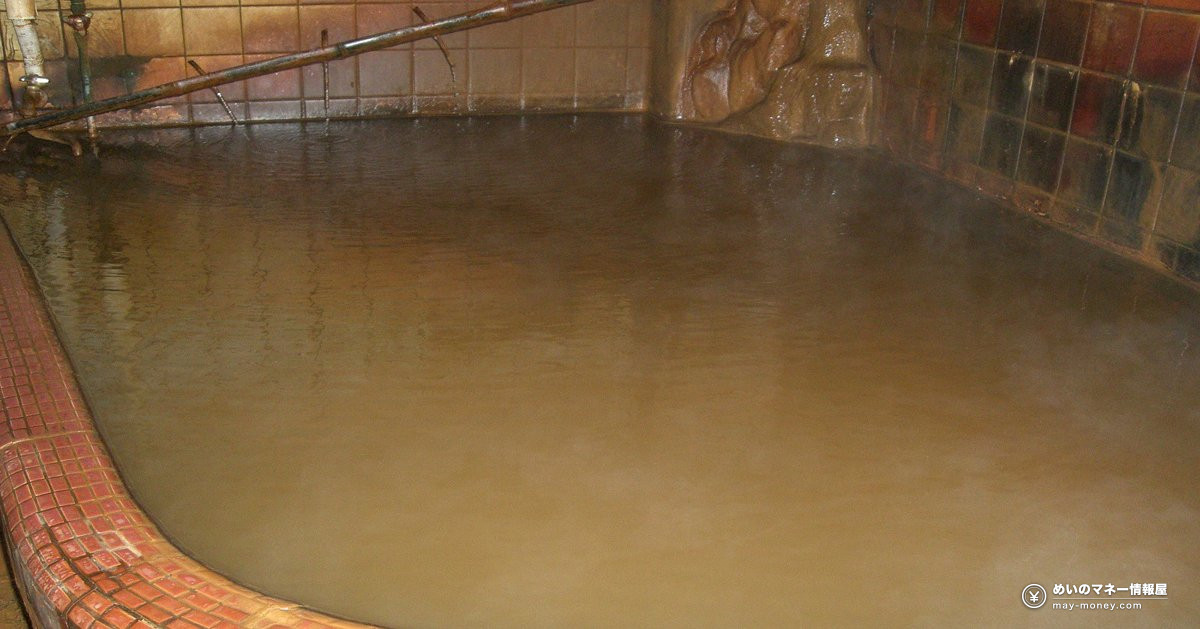
Water straight from Arima's Tenjin source. At 36 g of minerals per kilogram it is denser than seawater, among the strongest in Japan. Arima's famous "gold" water is as dark as red miso soup here. The 99°C source is cooled through split bamboo with holes, and the pipes are replaced weekly.
- pH 6.6 · 99.4℃
- Source: Drilled, flows by itself
- Served: Free-flowing, water added, not heated
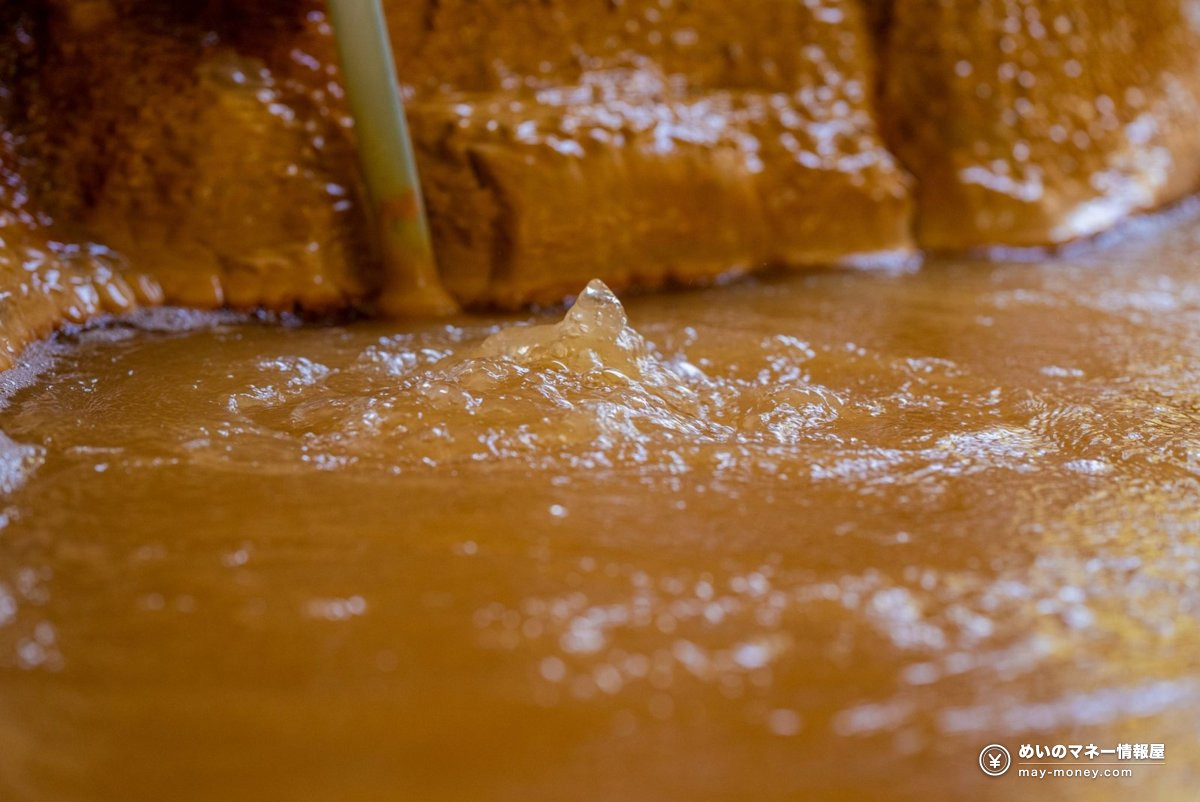
It rises from about 500 m underground on carbon dioxide pressure alone, with minerals at about 17 times the standard. Clear pipes show the water flowing, and deposits build up like stalactites on the tub edges. Alternate between the 25°C source bath and the 41.5°C heated bath; the drinking fountain is intensely salty, metallic and bitter.
- pH 6.3 · 25.2℃
- Source: Drilled, flows by itself
- Served: Free-flowing, no water added; heated only in the warm bath
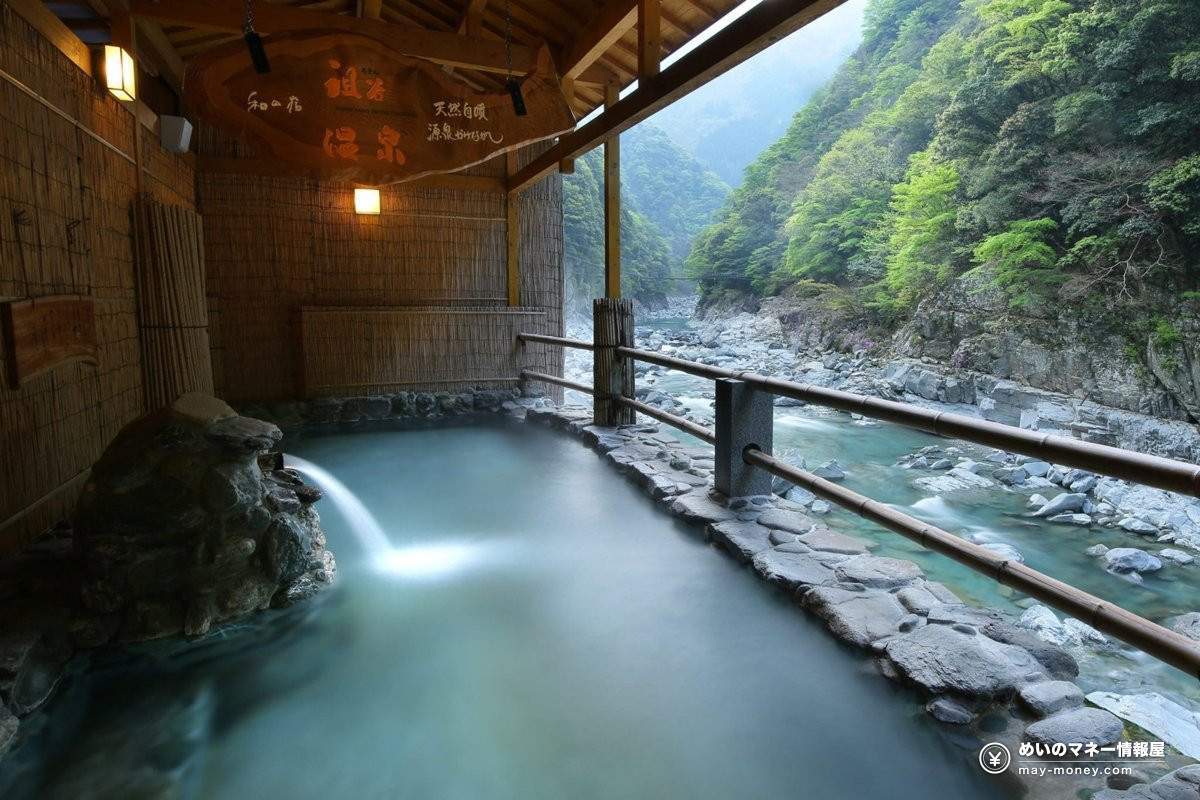
You drive a cable car yourself down to an open-air bath at the bottom of the gorge. The source pours out 1,500 liters a minute and is deliberately left unheated. Fine bubbles coat your whole body, which is why it is called one of Japan's best bubble onsen.
- pH 9.0–9.1 · 38.2–38.4℃
- Source: Drilled, flows by itself
- Served: Free-flowing, no water or heat added
Kyushu (6)
Six of the 21 are in Kyushu: three in Oita (carbonated, acidic iron and mud baths), two in Kumamoto (blue water and a bath that shakes the floor) and a community bath on Yakushima.
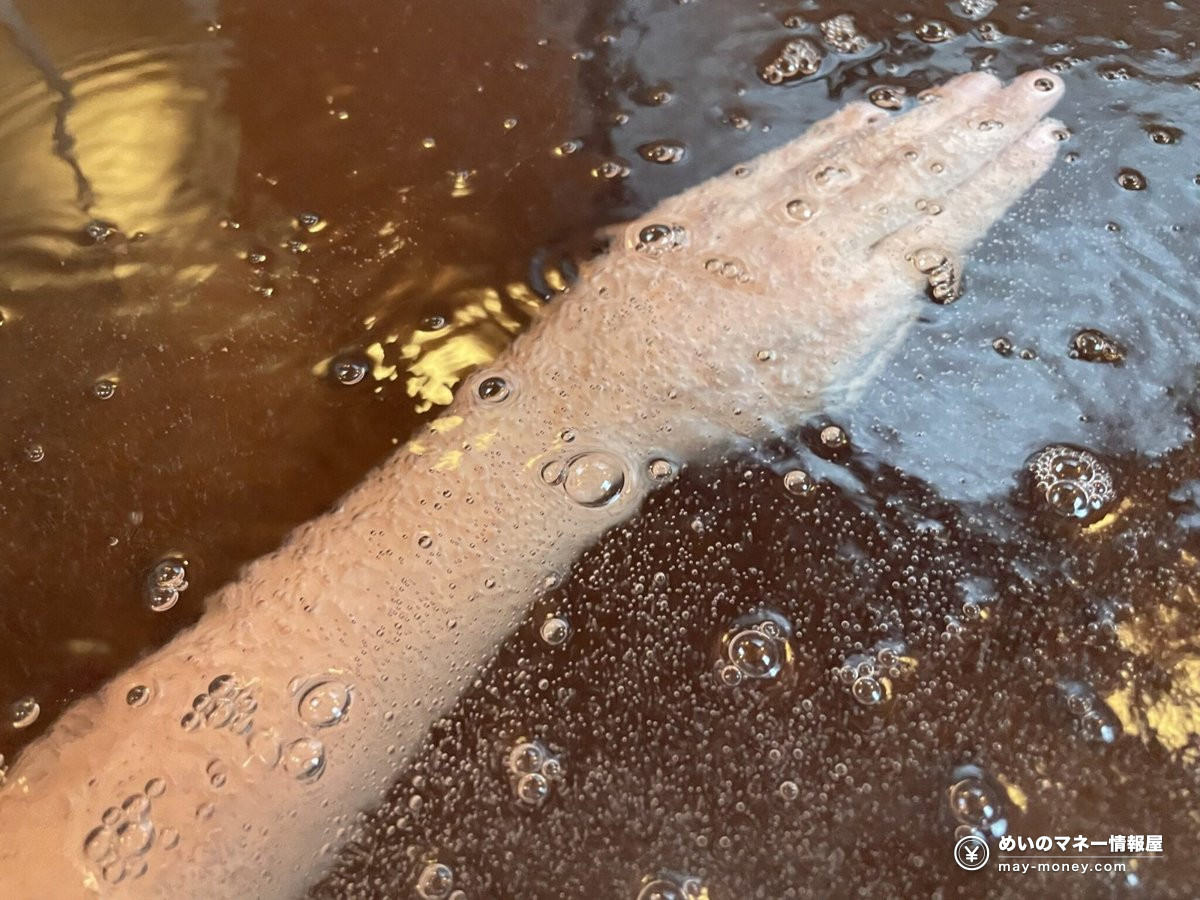
Like sitting in soda: one of Japan's strongest carbonated springs, a type said to make up under 0.5% of all sources. Silver bubbles cling to your skin almost instantly. At around 36°C, close to body temperature, you can stay a long time; the water enters just at the surface so the gas does not escape.
- pH 6.3 · 36.5℃
- Source: Drilled, flows by itself
- Served: Free-flowing, no water or heat added
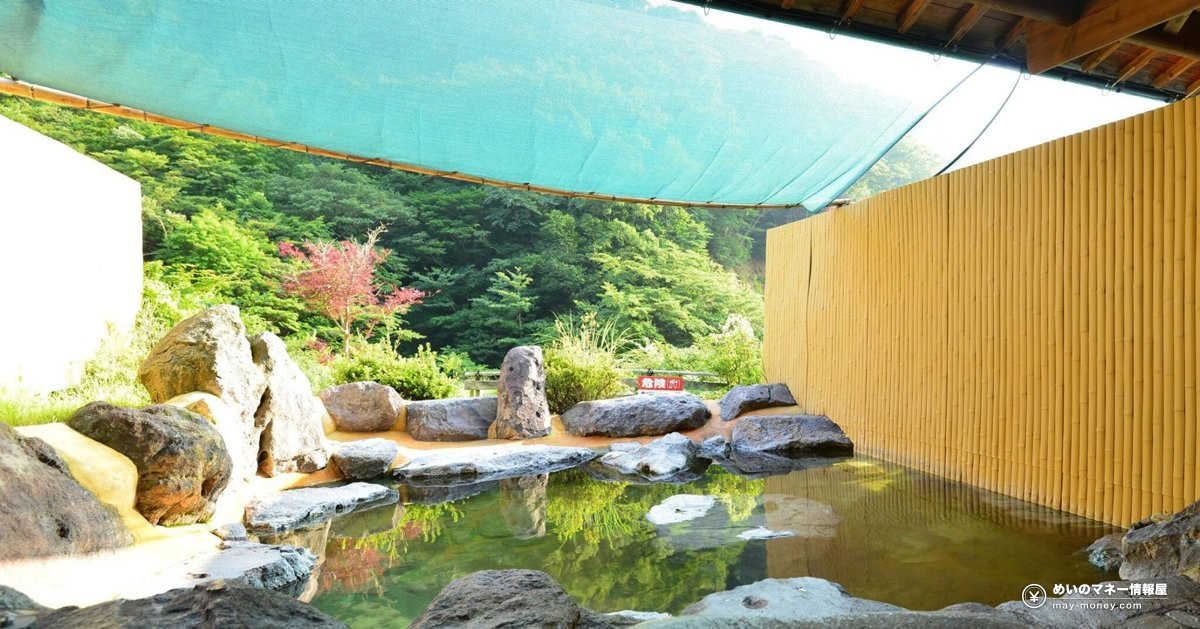
pH 2.0, about as acidic as lemon juice, with iron at about nine times the onsen threshold; the clear green color comes from fresh iron ions. It sits high on Mount Garan, and the crater is a five-minute walk away. The hot-water system below is called the mother of Beppu's hot springs.
- pH 2.0 · 50.3℃
- Source: Natural
- Served: Free-flowing, no water or heat added
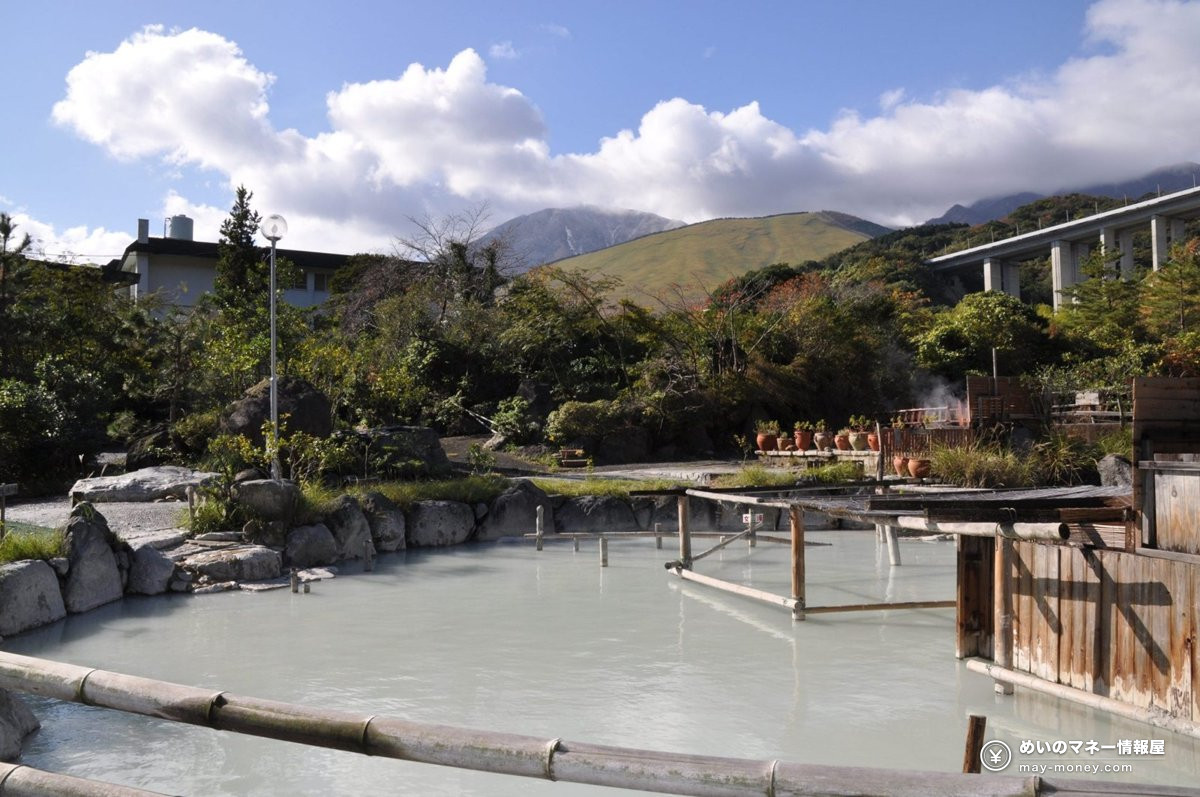
At Konya Jigoku in Beppu's Myoban area, natural mineral mud rises with the hot water from the bath floor, a very rare kind of mud bath. There are two types, sulfur mud and fine clay, and the small outdoor bath at the back is the thickest, like sitting in a warm sulfur rice paddy.
- pH 2.6–2.9 · 39.9–49.7℃
- Source: Drilled, flows by itself
- Served: Free-flowing, no water or heat added
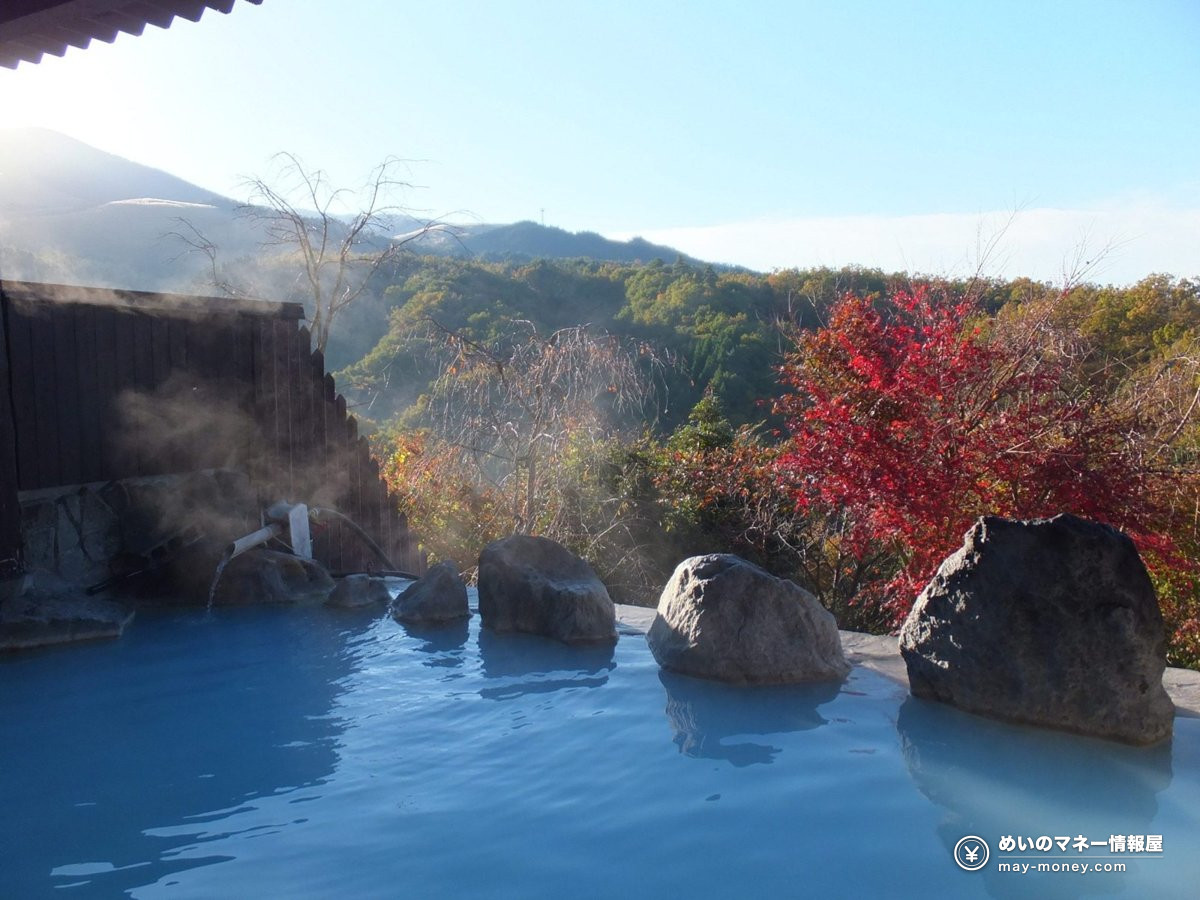
A nearly 100°C source that can turn a mysterious blue (aoyu): silica forms fine particles as it cools and scatters light, which only happens under certain conditions. Smooth, moisturizing water. The source is cooled in four tanks, and its heat is used for heating and jigoku-mushi steam cooking.
- pH 8.75 · 97.7℃
- Source: Pumped
- Served: Free-flowing, water added, not heated
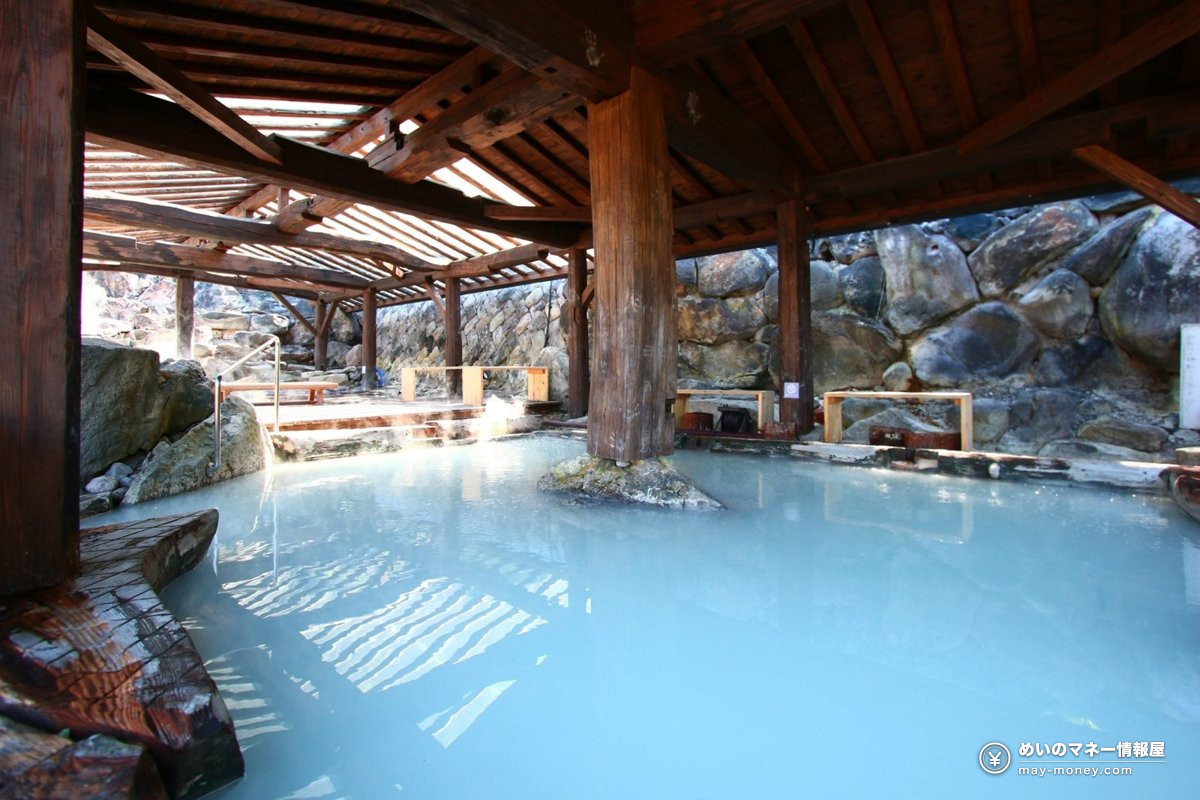
Suzume-no-Yu, the symbol of Jigoku Onsen: cloudy, acidic, sulfur-scented water boils up from the bath floor so hard the floor shakes. A cold mineral spring next to it lets you alternate, and it is also used to cool the hot bath, so hot spring water is cooled with spring water.
- pH 2.8–6.9 · 12.2–60.3℃
- Source: Natural (Suzume-no-Yu wells up from the floor)
- Served: Free-flowing, no water or heat added
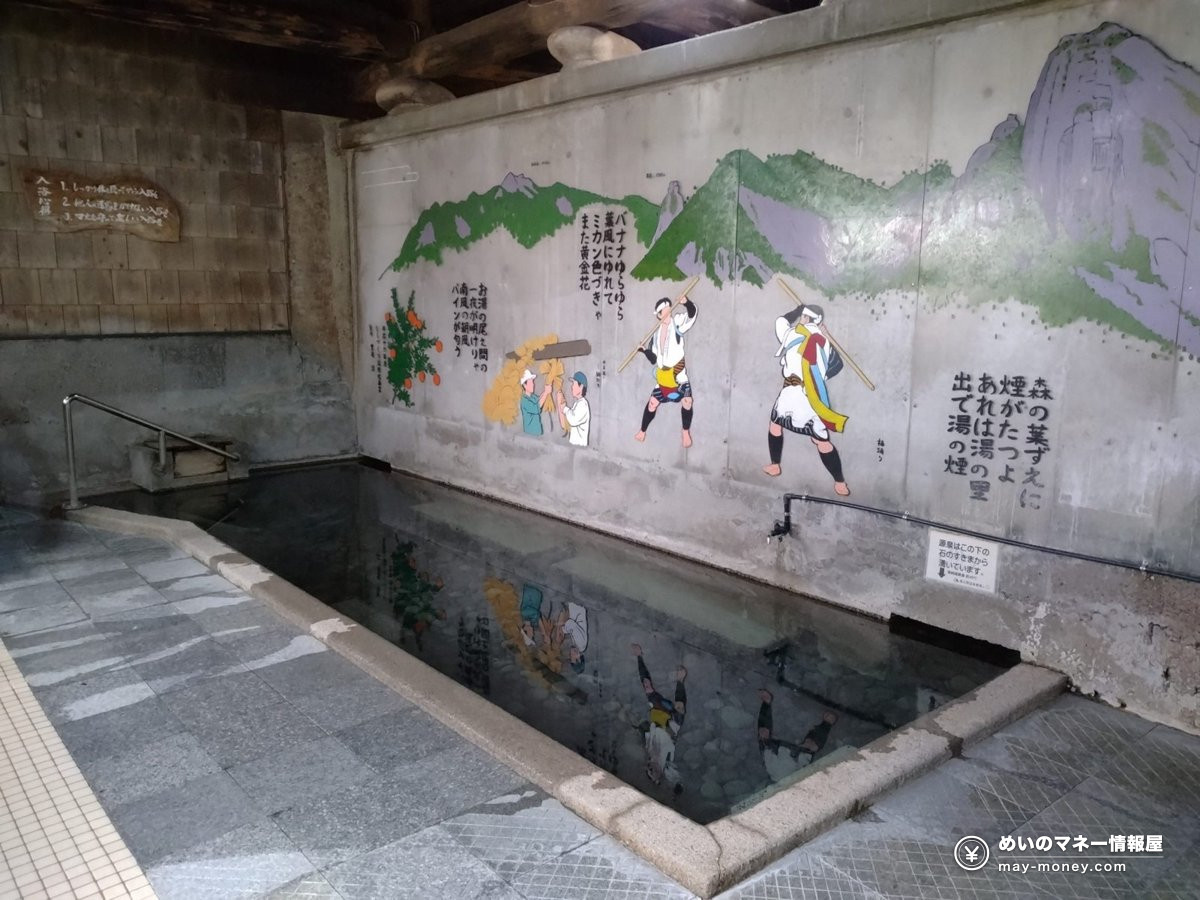
Rain on Yakushima's mountains is thought to be warmed by granite underground before it rises here, bubbling up like pearls between the stones of the bath floor. Clear water at pH 9.8 with a sulfur scent and an astonishingly slippery feel. At over 46°C, locals pour water over themselves many times before getting in. A community bath built by local residents and still used daily.
- pH 9.8 · 46.4℃
- Source: Wells up from the bath floor
- Served: Free-flowing, no water or heat added
Choose by the experience you want
Before you go: etiquette and house rules
With the travel-manners group Touristship, Yuchelin wrote five principles for “borrowing” a bath that locals have looked after for generations:
- “After you”: give locals space and priority, and avoid busy times.
- Say hello: a simple “konnichiwa” or “ojama shimasu” can lead to tips on how this bath is used.
- Enjoy the day’s temperature: natural springs are hotter some days and cooler others; ask a local before adjusting.
- Do the basics well: no photos in the bath or changing room, rinse and wash before getting in, do not hog the spout or washing area, rinse and return buckets and stools, take your trash home.
- Be grateful for a gift the earth took a very long time to make.
Yuchelin’s checklist before you set out:
- Check opening status on the facility page and call if needed
- Bring cash and coins
- Bring a towel, soap and shampoo
- Bring a white cup
- Keep your group size to what the bath can handle
Each card above lists that facility’s rules. The main ones:
No soap or shampoo: Shichirida Shitan-yu, Tsukahara Onsen Kako no Izumi, Beppu Hoyo Land, Kagai Onsen Ichiyokan (no washing area)
No bathing wear, towels or swimsuits: Beppu Hoyo Land
Mixed bathing, clothed: Jigoku Onsen Seifuso
Tattoos: not allowed at Kitsuregawa Soutome Onsen
Seasons and bookings: Tamagawa closes in winter; Shibu Tatsuno-kan needs a reservation for day bathing; Kunimi is day-use only in fiscal 2026
Yuchelin vs MICHELIN Keys
Some people also call Michelin’s Three-Key hotels “Michelin three-star onsen”. They are different things:
- Rates only the bath water
- First announced October 26, 2026
- 21 baths, mostly remote springs, toji inns and community baths
- Rates the whole stay
- Announced September 18, 2026
- 7 Three-Key hotels, 4 with onsen
No place is on both lists. For luxury stays, see our guide to Michelin’s Three-Key onsen hotels.
FAQ
- Q. What is Yuchelin?
- A hot spring rating created in 2026 by the general incorporated association Yuchelin. It scores only the water delivered to the bath on five criteria and named its first 21 three-star baths on October 26, 2026.
- Q. Is Yuchelin connected to Michelin?
- No. The name sounds similar, but it is run by a Japanese association and backed by the Ministry of the Environment, the Japan Tourism Agency and the Japan Travel and Tourism Association. Michelin rates hotels with Keys, and the lists do not overlap.
- Q. What does three stars mean?
- “A bathing experience that could change your life”. Two stars means a famous bath worth traveling for and one star a bath worth stopping at nearby; those two levels start in 2027.
- Q. Is the list a ranking?
- No. The 21 are listed from north to south, and Yuchelin says places not chosen are not worse.
- Q. Which bath is the most acidic?
- Tamagawa Onsen in Akita at pH 1.09, the most acidic in Japan and a rare hydrochloric type. Rinse off after bathing and remove precious metals. It closes in winter.
- Q. Can I visit as a day bather?
- Onoaida Onsen on Yakushima is a community bath; Shibu Tatsuno-kan takes day bathers by reservation; Kunimi Onsen Ishizuka Ryokan offers only day bathing and rest in fiscal 2026. Check each facility’s page for the others.
- Q. What should I bring?
- Yuchelin suggests cash and coins, a towel, soap and shampoo, and a white cup. Some baths ban soap or photos, so read the house rules first.
- Q. Which are easiest to reach from Tokyo?
- Hoshi Onsen Chojukan (Gunma), Kitsuregawa Soutome Onsen (Tochigi), Narada Onsen Shiranekan (Yamanashi), and two in Nagano: Kagai Onsen Ichiyokan and Okutateshina Onsen Shibu Tatsuno-kan.
Sources
- Yuchelin official site, home and the 21 facility pages (evaluation comments, bath data, facility info, rules)
- PR TIMES, “全国の温泉から最高評価「三ツ星」21施設、ついに発表!” (October 26, 2026)
- PR TIMES, “温泉評価制度「湯シュラン」創設” (October 5, 2026)
Checked on November 1, 2026. Hours, prices and rules may change; please confirm with each facility and on the Yuchelin site.
Read next


Get new articles by email
We will email you when a new deals article goes up. You can choose the categories, too.