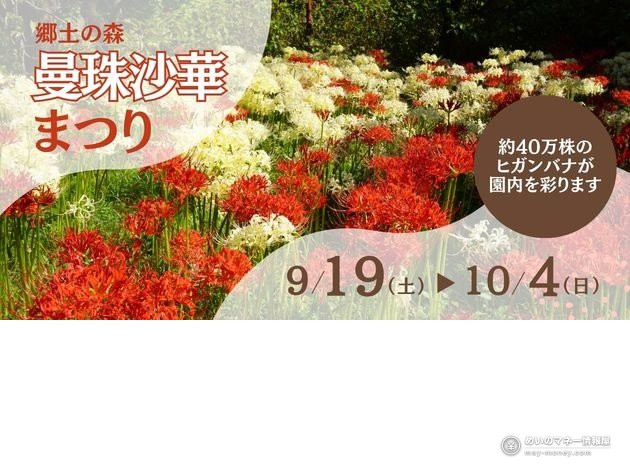
The 4th Kyodo no Mori Manjushage Festival turns the grounds of a city museum into the kind of red-carpeted paddy landscape that used to line the Tama River.
¥300adult admission ・ junior high and under ¥150What the festival actually is
Red spider lilies open for roughly two weeks a year, around the autumn equinox, which is why they are known in Japanese as higanbana (彼岸花) – the equinox flower. The other name, manjushage (曼珠沙華), is the one the Fuchu City Kyodo no Mori Museum (府中市郷土の森博物館) uses for its festival, now in its fourth year.
What makes this one different from a roadside patch of flowers is that the scenery was deliberately rebuilt. Staff have been planting here for more than ten years, aiming to recreate the paddy fields, embankments and irrigation channels that once ran along the Tama River in Fuchu, with spider lilies edging all of them. The count today is around 400,000 plants spread across the museum grounds, mixed in with historic buildings and open green space rather than packed into a single flower bed.
Dates, hours and admission at a glance
| Event name | The 4th Kyodo no Mori Manjushage Festival (第4回 郷土の森 曼珠沙華まつり) |
|---|---|
| Dates | Saturday 19 September to Sunday 4 October 2026 No closing days during the period |
| Hours | 9:00 – 17:00 Last entry 16:00 |
| Venue | Fuchu City Kyodo no Mori Museum (府中市郷土の森博物館) |
| Address | 6-32 Minami-cho, Fuchu-shi, Tokyo (東京都府中市南町6-32) |
| Admission | Adults ¥300 Junior high school and under ¥150 Under 4 free |
Sixteen days with no closed days in between is generous for a flower event, and the flat ¥300 admission is the museum’s normal entry fee rather than a festival surcharge. A family of two adults and two elementary-school children is still inside four-figure territory, which puts this closer to a park outing than a ticketed attraction.
Timing your visit: red spider lilies bloom fast
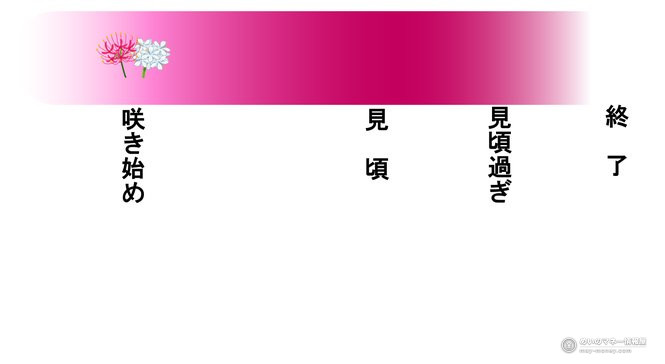
This is the part most first-time visitors underestimate. Spider lilies push up a bare stem, open, and fade within days, so a single site can go from tight buds to past peak inside one week. A sixteen-day festival window does not mean sixteen days of peak colour.
The museum publishes a bloom-stage chart so you can see roughly how the blooms are progressing before committing to the trip. If your schedule is flexible, checking it the morning you plan to go is worth the two minutes.
Getting there and what to bring
The venue sits in the south of Fuchu City, at 6-32 Minami-cho. Access routes and parking details are listed on the museum’s site, so map the trip from your own station rather than relying on a generic guide – western Tokyo lines fan out in ways that make the fastest route very dependent on where you start.
Practical notes for the day itself: the grounds are large and mostly outdoors, so treat it as a walk rather than a gallery visit. Water, a hat and comfortable shoes cover almost everything. Last entry is 16:00, one hour before closing, which is tighter than people expect – arriving at 15:50 gives you barely enough time to reach the far end of the site.
If you are building a wider day out of it, an autumn trip on local trains pairs well with the season; our guide to the Aki no Norihodai Pass for three days of JR local trains covers how far ¥7,850 actually stretches. For a warm finish after several hours on your feet, the ¥300 sento coupon valid at 383 Tokyo bathhouses costs the same as admission here.
Taiko, monkey performances and workshops
The flowers are the reason to come, but the museum schedules things to watch across the period as well. The announced line-up includes taiko drumming, sarumawashi (traditional monkey performance), and hands-on workshops aimed at both children and adults.
The line-up is spread over the sixteen days rather than running daily, so if a particular performance is the draw for you, confirm the date and start time on the event page before setting out. The flowers do not need a schedule; the drums do.
Is it worth the trip?
For ¥300, the maths is easy. Even a partial bloom leaves you with a museum, historic buildings and open grounds to wander, and the entry price is what you would pay for a canned coffee and change. The risk is not money, it is timing – turning up a week after peak and finding brown stems.
So the honest recommendation is: check the bloom status first, then go. It is a low-cost, high-payoff autumn outing that does not require booking, queuing or a whole weekend, and it is one of the few flower events where the landscape itself was designed to look like something that no longer exists.
Official pages: festival event page ・ Fuchu City Kyodo no Mori Museum
Questions people ask before going
- Q. How much does it cost to get in?
- Adults ¥300, junior high school students and younger ¥150, children under 4 free. That is the museum admission and it covers the festival grounds.
- Q. Are there closed days during the festival?
- No. The museum states there are no closing days between 19 September and 4 October 2026.
- Q. What time should I arrive?
- The grounds are open 9:00 to 17:00, but the last entry is 16:00. Arriving before 15:00 gives you enough time to walk the site properly.
- Q. How many flowers are there?
- Around 400,000 plants across the museum grounds, planted by staff over more than ten years to recreate the old Tama River paddy landscape.
- Q. Do I need to book in advance?
- Nothing in the published information indicates advance booking is required for general entry. Individual workshops may differ, so check the museum’s event page for the day you plan to visit.
- Q. Will the flowers definitely be open when I go?
- Not guaranteed. Red spider lilies peak for only about a week, so check the bloom-stage information on the museum’s site before travelling.