💡 Key Takeaway: Tatiaigai Bunbai (立会外分売 / off-hours block distribution) is a low-risk, beginner-friendly investment opportunity in Japan\’s stock market. You can buy listed company shares at a 2-5% discount from the previous day\’s closing price, with zero purchase fees. Historical data shows a win rate of approximately 80% when selling at opening price — a classic low-risk, modest-return strategy. While individual profits are modest (averaging a few thousand yen per 100 shares), consistent participation steadily builds returns, making it an ideal complement to IPO investing.
- International residents in Japan looking for low-risk stock market opportunities
- IPO investors wanting to diversify their income streams
- Beginner investors seeking accessible, low-barrier entry strategies
- Anyone interested in Japan-specific investments like shareholder benefits and IPO
💡 You only need a residence card and My Number to open a brokerage account!
What Is Tatiaigai Bunbai?
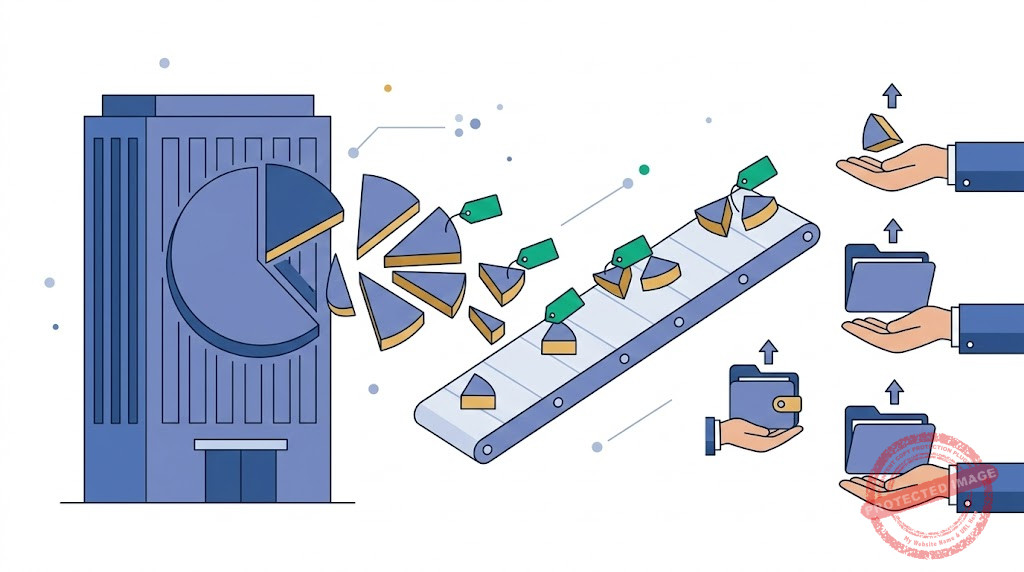
Tatiaigai Bunbai (立会外分売 / たちあいがいぶんばい), simply put, is a \”stock discount sale\”. Major shareholders (founders, banks, etc.) sell large blocks of shares outside regular trading hours (= tatiaigai), distributing them in small lots to individual investors.
\”Tatiaigai\” means outside trading hours; \”bunbai\” means divided distribution. Why off-hours? Because dumping a large volume during trading hours would crash the stock price. By completing transactions at a fixed price outside trading hours, this approach avoids major price swings while increasing the number of individual shareholders and improving stock liquidity.
The distribution price is based on the previous trading day\’s closing price, typically with a 2-5% discount (TSE rules allow up to 10%). The average discount is about 3%. Purchases are commission-free (standard fees apply when selling), and shares can be sold the same day.
Think of bunbai like a supermarket flash sale — a brand (major shareholder) wants to move inventory (shares), so the store (stock exchange) sells them at a discount (2-5% off) to customers (investors) before opening, first-come-first-served (or lottery if oversubscribed). Once the store opens the next day, you can resell at market price.
Why Do Companies Offer Bunbai?
Understanding why companies conduct distributions is crucial for deciding whether to participate. There are three main reasons:
① Increase Shareholder Count (Most Common ✅)
To upgrade from TSE Growth/Standard to TSE Prime requires meeting conditions like \”2,200+ shareholders.\” Distributing shares to more individual investors effectively achieves this. In these cases, expectations of a market upgrade often push stock prices higher — the most favorable scenario for investors.
② Improve Stock Liquidity
When most shares are concentrated among a few major shareholders, market liquidity is low. Distribution introduces more tradeable shares, making buying and selling more active and contributing to healthier price formation.
③ Major Shareholder Cash-Out (⚠️ Caution Needed)
Sometimes parent companies sell subsidiary shares through distribution to raise funds or lock in profits. This may happen when stock prices are high. Investors need to carefully review corporate IR information to determine if it\’s purely a cash-out. If major shareholders are simply taking profits, it could negatively impact the stock price.
Reasons ①② are generally positive signals worth participating in. Reason ③ requires careful judgment. Check the \”Purpose\” section in the distribution announcement — phrases like \”improving floating share ratio\” or \”improving share distribution\” typically indicate ①②. If the seller is a major shareholder with vague reasons, exercise caution.
How to Participate: 5 Steps
Step 1: Check Announcement — Brokerages typically announce distributions 1-2 weeks ahead. Some are announced just the day before. Register for email notifications from your brokerage.
Step 2: Price Confirmation — After the previous trading day\’s close (~5 PM), the official distribution price and discount rate are published. Price = Previous close × (1 – Discount rate).
Step 3: Apply — Application times vary by broker, generally from evening (~5:15-6 PM) to 8:20 AM on distribution day. Sufficient funds must be in your account.
Step 4: Lottery — When applications exceed available shares, a lottery is held. Each broker conducts an internal lottery based on their allocation from the exchange. Applying through multiple brokers increases your chances.
Step 5: Win and Sell — Winners receive shares in their account on the same day, available for sale from market open. Many investors sell immediately at the opening price to lock in the discount profit.
Pros and Risks
- Discount Purchase — 2-5% below previous close
- Zero Purchase Fee — No commission to buy
- Same-Day Sale — Sell immediately after winning
- Quick Process — Apply at night, results next day
- High Win Rate — ~80% at opening price sale
- Low Barrier — Start from 100 shares, a few tens of thousands of yen
- NISA Compatible — Available at select brokerages
- Possible Loss — Opening price may fall below distribution price
- No Guarantee of Winning — Popular stocks require lottery
- Small Profit — Usually a few thousand yen per 100 shares
- May Be Cancelled — Sudden market changes can halt distributions
- Time-Sensitive Info — Need to stay on top of announcements
- Selling Fees — Standard commission applies when selling

How Does It Differ from IPO and PO?
Tatiaigai bunbai is often compared to IPO (Initial Public Offering) and PO (Public Offering / Secondary Offering). All three involve buying stocks at favorable prices, but they differ significantly in scale, timeline, and returns.
| Comparison | Tatiaigai Bunbai | IPO | PO |
|---|---|---|---|
| Definition | Major shareholders sell existing shares off-hours | Unlisted company issues new shares publicly | Listed company issues additional/sells existing shares |
| New Shares? | ❌ No | ✅ New shares issued | May issue new (offering) or sell existing |
| Scale | Small (tens to hundreds of thousands of shares) | Medium to Large | Large (millions of shares) |
| Discount Rate | 2-5% (avg ~3%) | Variable (market determines initial price) | 2-4% |
| Application Period | ~14 hours (evening to next morning) | ~1-2 weeks | ~1-2 weeks |
| Result to Sellable | Same day | Listing day (~1-2 weeks later) | Settlement day (~1 week later) |
| Win Rate (Immediate Sell) | ~80% | ~80% (initial price > offering price) | ~50-60% |
| Profit per Trade | Small (¥100s-¥1000s per 100 shares) | Large (¥10,000s-¥100,000s) | Medium (¥1,000s-¥10,000s) |
| Winning Difficulty | Relatively Easy | Very Difficult | Moderate |
| Annual Count | ~50-130 per year | ~80-100 per year | ~20-40 per year |
In simple terms: IPO is the high-reward but hard-to-win \”jackpot\”, while bunbai is the small-reward but easy-to-win \”scratch card\”. If you\’re already doing IPO investing, bunbai makes an excellent complement — effectively using your capital and time while waiting for IPO wins.
IPO Complete Guide | ~80% Win Rate Low-Risk High-Return InvestmentHistorical Performance Data
Below is annual data for bunbai distributions since 2018. “Win rate” indicates the percentage where the opening price exceeded the distribution price.
| Year | Cases | Win Rate | Avg P&L/Case | Notes |
|---|---|---|---|---|
| 2026 (through Feb) | 6 | 100% (6W-0L) | +¥5,167 | Perfect start 🔥 |
| 2025 | 65 | 81.5% (53W-5D-7L) | +¥3,203 | Volume recovery, stable win rate |
| 2024 | 52 | 80.8% (42W-3D-7L) | +¥2,063 | Steady performance |
| 2023 | 61 | 80.3% (49W-4D-8L) | +¥2,623 | Win rate stayed above 80% |
| 2022 | 72 | ~75% | — | Market volatility, slightly higher loss rate |
| 2021 | 93 | ~80% | — | High case count |
| 2020 | 85 | ~75% | — | COVID impact |
| 2019 | 105 | ~80% | — | Active year |
| 2018 | 127 | ~75% | — | Peak year for case count |
Note: Win rates for 2022 and earlier are estimates; 2023-2026 are based on complete data
From 2018 to 2025, a total of 660 bunbai distributions were conducted. Case counts peaked at 127 in 2018, declined to 52 in 2024, then recovered to 65 in 2025.
The opening-price sell win rate has remained stable at 75-82% long-term. Three consecutive years (2023-2025) above 80%. However, win rate ≠ guaranteed profit — about 20% of the time the opening price falls below the distribution price. Stock selection is the key to improving your personal win rate.
🏆 2025 Highlights
The top 5 profit makers in 2025 were: Tokei Densan +¥13,000, B-R Thirty One +¥12,800, Zero +¥11,400, Papanets +¥11,000, and B-R Thirty One② +¥10,800. Both B-R Thirty One and Tokei Densan were distributed twice during the year.
2026 has started with a perfect 6/6 record, averaging ¥5,167 per trade. Medical Ikko Group recorded +¥14,300, the highest single-trade profit in the past two years.

How to Pick Good Targets
Not every bunbai distribution is worth participating in. The following criteria help you filter for higher win-rate targets:

Recommended Brokerages
The distribution price and discount rate are the same regardless of which brokerage you apply through. The differences are in allocation methods and application times. Applying from multiple brokerages simultaneously is the most effective way to increase your winning chances.
Use SBI Securities or Rakuten Securities as your main brokerage (funds are usually already there for quick applications). Then prioritize adding Okasan Online and Nomura Securities — fewer users means less competition and higher win rates. If you’re confident in your speed, try SBI Neotrade’s first-come-first-served system. Forgot to apply the night before? Matsui Securities has a late deadline to save you. Add Monex Securities if you have extra funds. These accounts also work for IPO investing — two birds, one stone.

Practical Tips
1. Apply the Night Before
Application windows open the evening before distribution day. Complete all brokerage applications at night, so the next morning you only need to check results and decide whether to sell.
2. Bookmark Batch Open
Create a “Bunbai” folder in your browser bookmarks with all brokerage application pages. Right-click → “Open all in tabs” to apply everywhere at once.
3. Set Up Email Notifications
Register for email notifications at each brokerage to get instant win/loss alerts. SBI Neotrade and Monex typically send the fastest notifications.
4. After Winning: Sell at Opening Price
After winning, the recommended strategy is to place a market sell order at opening to lock in the discount profit. Distribution day naturally has higher selling pressure, so securing the discount profit and exiting is the most stable approach. Place a “market order” the night before and it auto-executes at 9 AM.
Important Notices
⚠️ Bunbai is not risk-free. Even at discounted prices, the opening price may fall below the distribution price approximately 20% of the time (“bunbai-ware”).
⚠️ Distributions may be cancelled or postponed due to sudden market changes. Continue monitoring announcements after applying.
⚠️ Standard selling commissions apply when you sell. Using a brokerage with zero-fee plans maximizes your profit.
⚠️ Don’t participate blindly just because it’s discounted. Always check the company’s earnings, distribution purpose, and price trends before deciding.
⚠️ Bunbai profits are taxable. Trading in a tokutei koza (specified account with tax withholding) auto-handles taxes. Purchasing through a NISA account makes profits tax-free.