Kokia Carnival at Hitachi Seaside Park: when the hill turns red, and what a ticket actually costs
About 40,000 kokia bushes cover Miharashi Hill, and the park now plants them on the lower slope too, so the red runs from the foot of the hill all the way to the top.
18 Sep – 3 NovKite Mite Sawatte Kokia Carnival (きて みて さわって コキアカーニバル)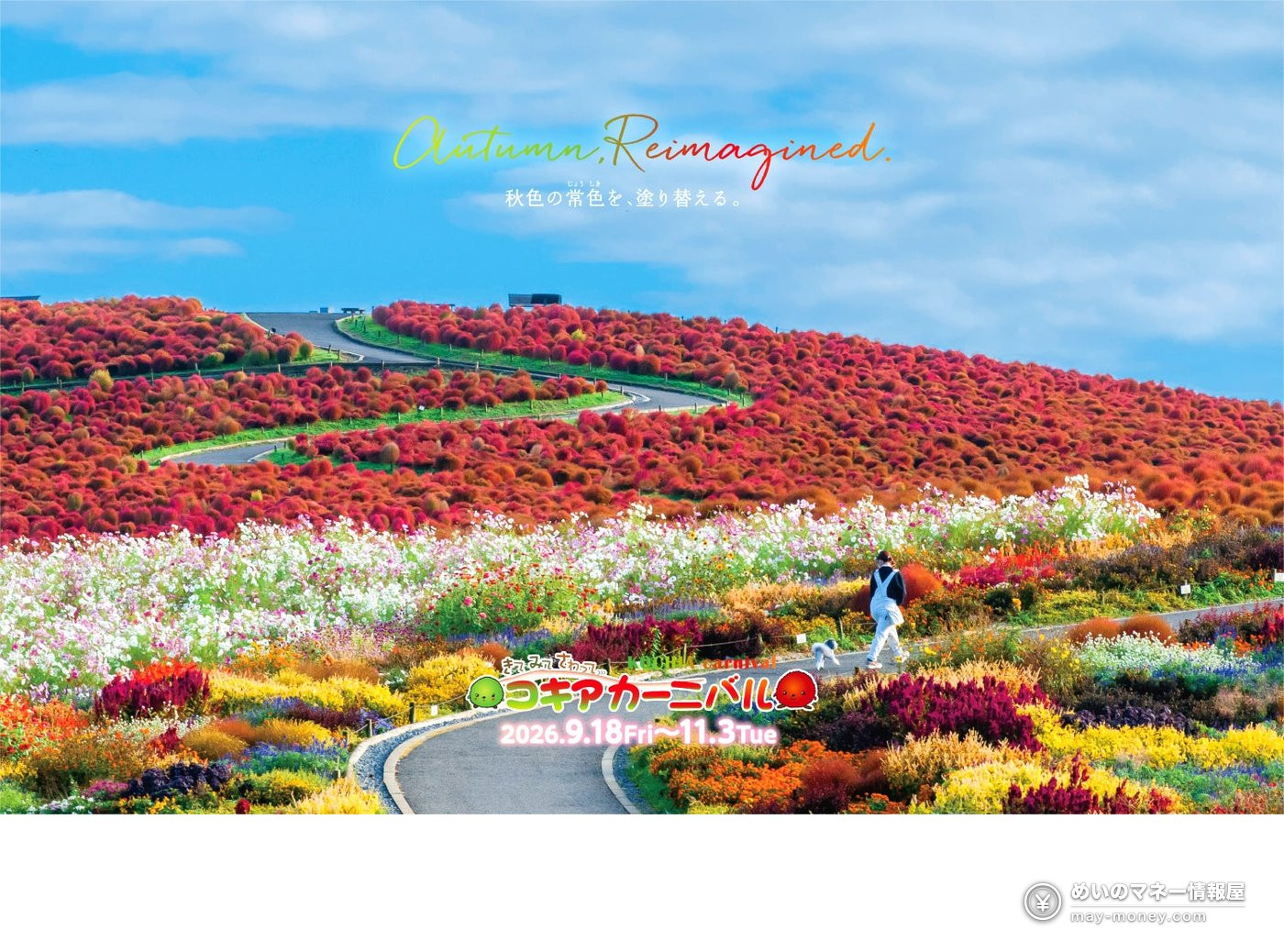
Photo: Koen Zaidan / Park Foundation (from the PR TIMES press release)
If you have lived in Japan for a couple of autumns, you have probably seen the photo: a whole hill of round crimson puffballs above the Pacific. That hill is Miharashi Hill (みはらしの丘) in Hitachi Seaside Park (国営ひたち海浜公園), in Hitachinaka, Ibaraki, and this year the autumn programme built around it runs from 18 September to 3 November.
The plant is kokia (コキア), known in Japanese as hokigusa or hokigi because the dried stems were once bundled into brooms. Some varieties produce edible seeds sold as tonburi. What matters for a day trip, though, is the colour clock — and the fact that the ticket price changes partway through the period. Both are covered below.
The carnival at a glance
| Event | Kite Mite Sawatte Kokia Carnival (きて みて さわって コキアカーニバル) |
|---|---|
| Period | 18 September (Fri) – 3 November (Mon, public holiday) Open daily except 29 September (Tue) |
| Hours | 18 Sep – 31 Oct: 9:30–17:00 1 Nov – 3 Nov: 9:30–16:30 |
| Where | Miharashi Hill and Miharashi no Sato, Hitachi Seaside Park |
| Address | 605-4 Onuma, Mawatari, Hitachinaka, Ibaraki |
| Kokia | About 40,000 plants, 4 varieties (including the sample garden) |
| Enquiries | Hitachi Park Management Centre, 029-265-9001 |
Peak colour
Around 15 October, per the park’s own forecast, and it lasts roughly 7–10 days.
Price changes
From 9 October an adult ticket is 800 yen instead of 450 yen.
Free days
26 and 27 September for everyone; 21 September for visitors aged 65 and over.
When the kokia actually turn red
This is the part people get wrong. The carnival opens on 18 September, but the bushes are still green then. The colour change is gradual: green, then a green-and-red gradient, then full crimson, then a red-and-brown gradient as the season closes.
The park published its own forecast: Miharashi Hill is expected to reach the start of colouring around 10 October, and best viewing around 15 October. In a normal year the peak holds for about one week to ten days.
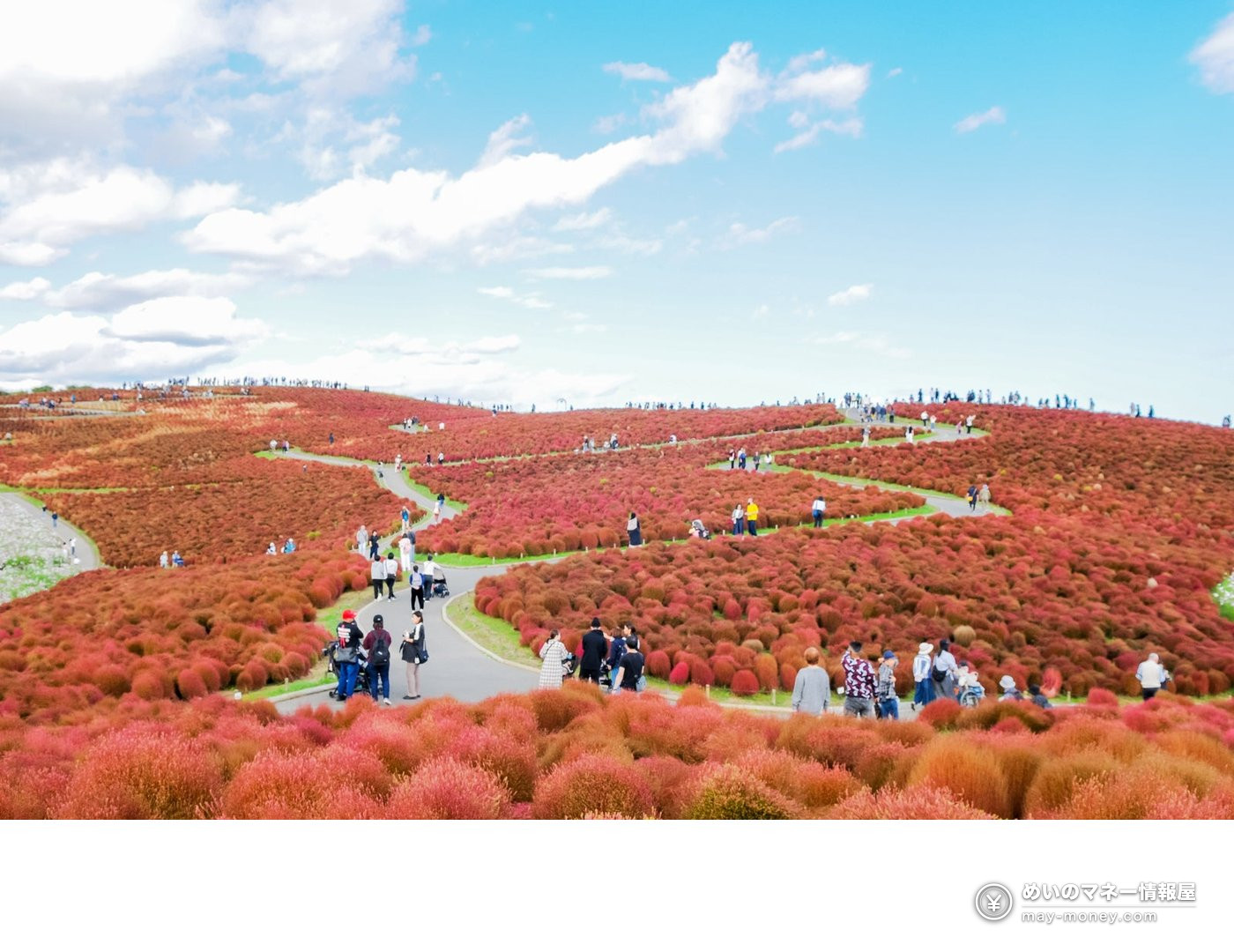
Photo: Koen Zaidan / Park Foundation (from the PR TIMES press release)
How to read this forecast in practice:
- Late September to early October — green kokia. Still photogenic against the yellow cosmos, and cheaper, but not the postcard shot.
- Around 10–14 October — the gradient stage, which many regulars prefer to the solid red.
- Mid October, from about the 15th — full crimson. Also the most crowded window of the year.
- Late October — red shifting towards gold and brown across the whole hill.
Forecasts move with the weather, so re-check the park’s colour report page before you commit to a date. Working backwards from 15 October and booking a weekday if you can is the single best decision you can make about this trip.
Tickets: the seasonal surcharge nobody expects
Admission is cheap at the start of the carnival and noticeably more expensive once the kokia start to colour. From 9 October to 3 November the park applies a seasonal fee of 350 yen on top of normal admission, and you buy a single combined ticket at the gate.
| Ticket | 18 Sep – 8 Oct | 9 Oct – 3 Nov (seasonal period) |
|---|---|---|
| Adult | 450 yen | 800 yen |
| Silver (65 and over) | 210 yen | 560 yen |
| Junior high school age and younger | Free | Free |
Parking is separate and charged per day: 600 yen for a standard car, 300 yen for a motorcycle and 1,800 yen for a large vehicle.
Three days you can get in free
The park has set three free admission days inside the carnival period. Parking is still charged on all of them.
- 21 September (Mon, public holiday) — Respect for the Aged Day. Free for visitors aged 65 and over.
- 26 September (Sat) and 27 September (Sun) — free for everyone, as part of the autumn urban greening month.
All three fall before the leaves turn, so treat them as a cheap reconnaissance visit or a family outing rather than a kokia photo mission. The upside is real, though: a household of two adults pays nothing at the gate on 26–27 September and only the parking fee.
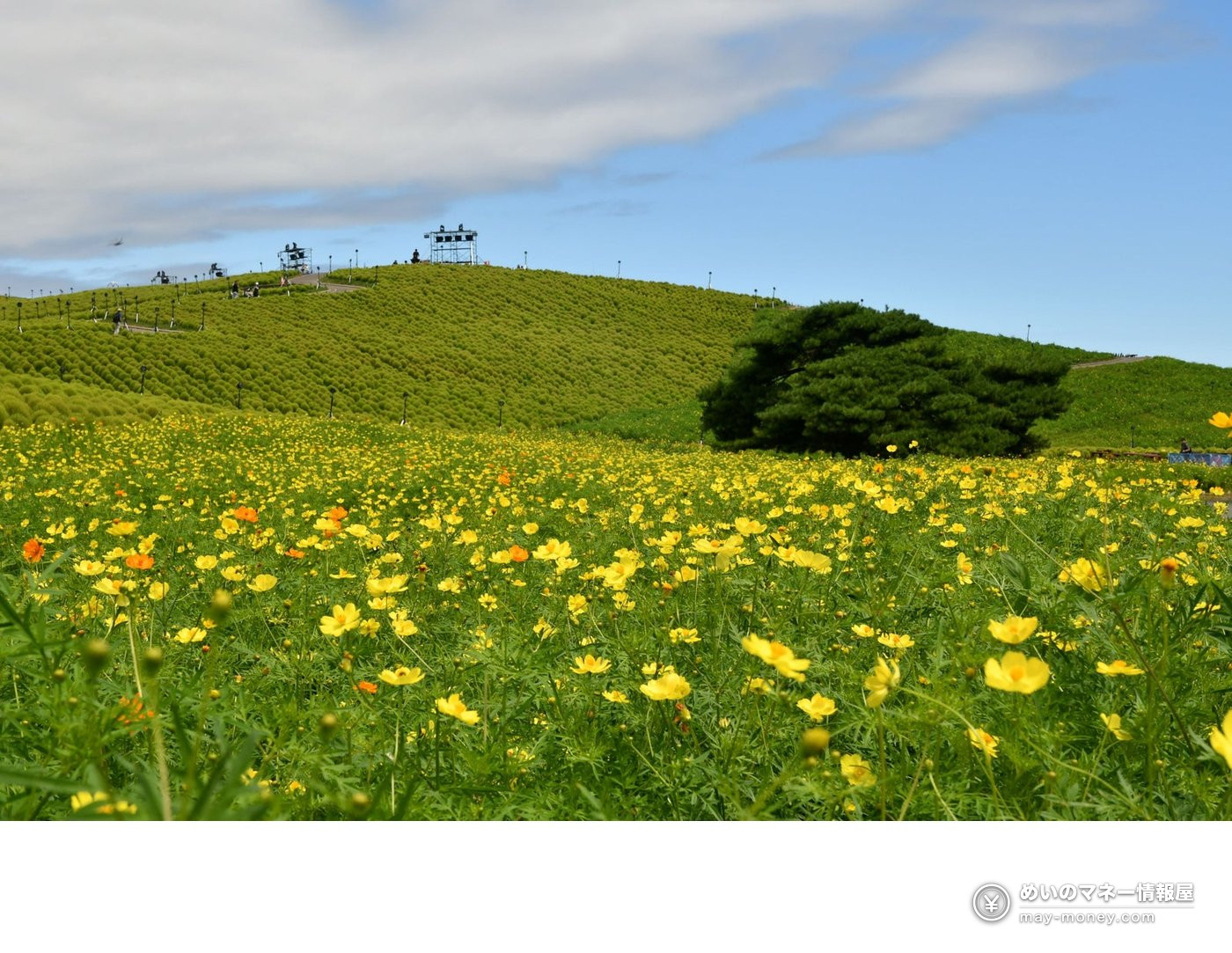
Photo: Koen Zaidan / Park Foundation (from the PR TIMES press release)
What else is blooming while you are there
The kokia get the attention, but the park schedules several flowers to overlap with them, which is why late-season photos of the red hill usually have colour in the foreground too. This year the welcome garden at the hill entrance is twice the area it was.
| Plant | Best viewing | Scale | Where |
|---|---|---|---|
| Kokia (autumn colour) | Mid to late October | About 40,000 plants, 4 varieties | Miharashi Hill, Miharashi no Sato |
| Yellow cosmos (kibana cosmos) | Early to late October | About 2.7 million, 2 varieties | Miharashi Hill |
| Welcome Garden | Mid August to late October | About 40,000, 31 varieties | Hill entrance to the first summit |
| Zinnia | Mid August to late September | About 350,000 (2 varieties, one colour) | Miharashi no Sato |
| Lycoris | Late September to early October | About 18,000, 1 variety | Hina no Hayashi |
| Pampas grass | Late August to late September | About 500 clumps | Around the Grand Prairie |
| Roses | Late October to early November | About 2,900 bushes, 120 varieties | Hitachi Rose Garden |
Note the tail end: the roses peak from late October into early November, exactly when the kokia are fading to gold. If you cannot get there in mid October, a visit in the final week still gives you two things worth seeing.
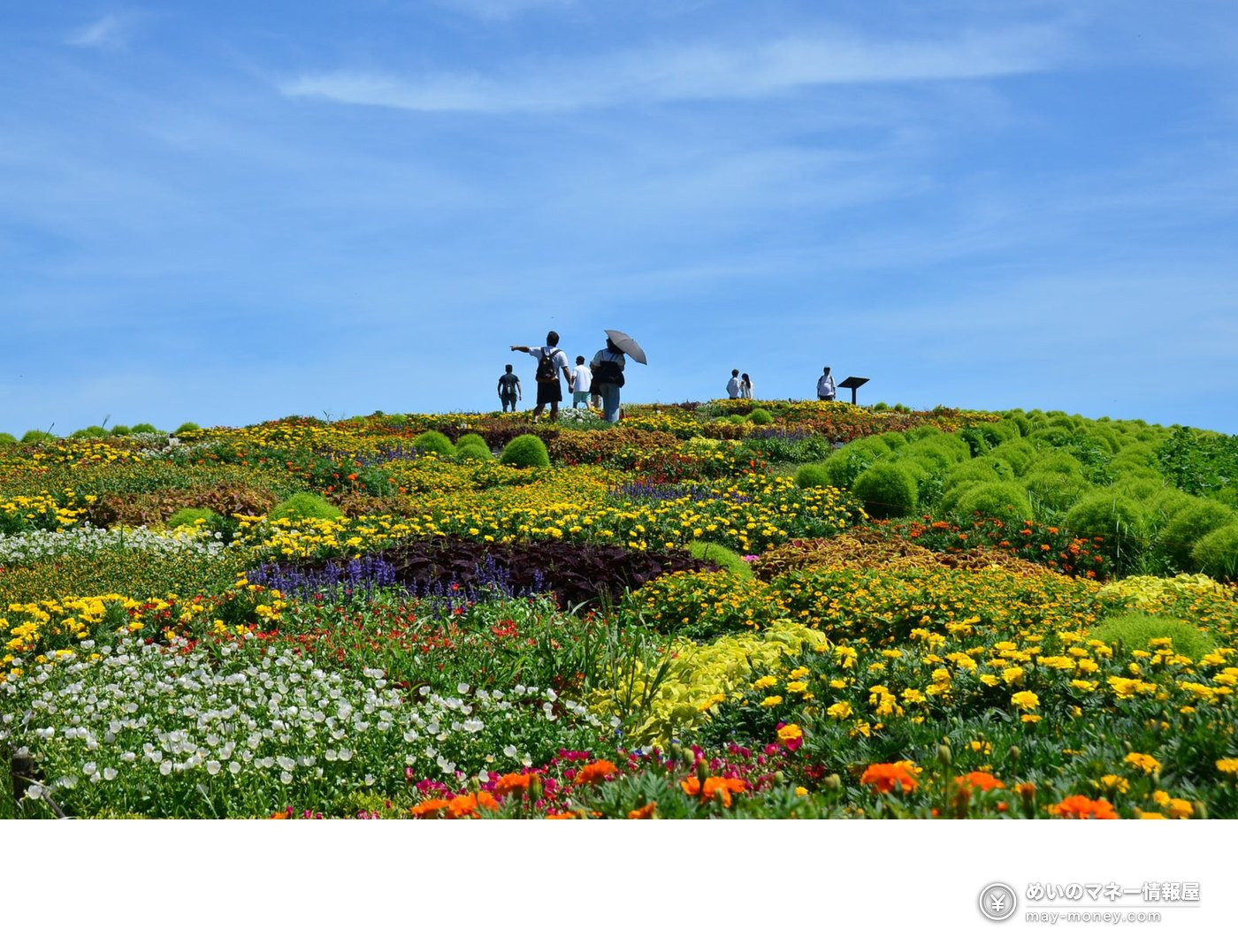
Photo: Koen Zaidan / Park Foundation (from the PR TIMES press release)
Weekend events during the carnival
The carnival is not only flowers. A run of one-day events is scheduled across the period, most of them hands-on and family friendly.
| Date | Event | What it is |
|---|---|---|
| 27 Sep | Health Sports Festival | Get-moving health activities in the open air |
| 11 Oct | Ibaraki Urban Greening Festival | Planting and gardening activities for visitors |
| 17–18 Oct | Kaihin Pottery Festival | Two days built around Kasama ware and its makers |
| 24 Oct | Volunteer Festival | Run mainly by the park’s own volunteer groups |
| 25 Oct | Brass Band Carnival | School groups and the Ibaraki Police band, wind and marching music |
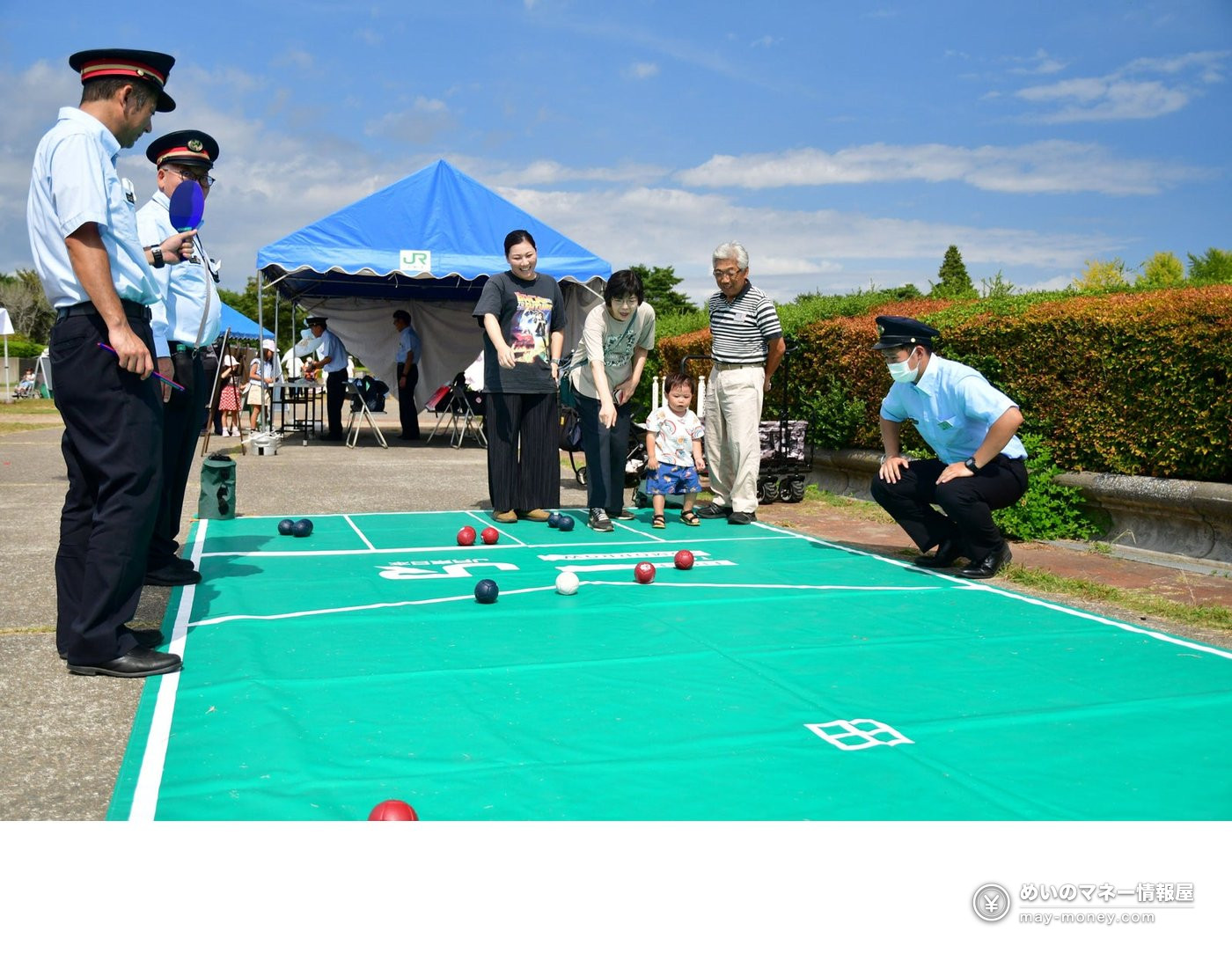
Photo: Koen Zaidan / Park Foundation (from the PR TIMES press release)
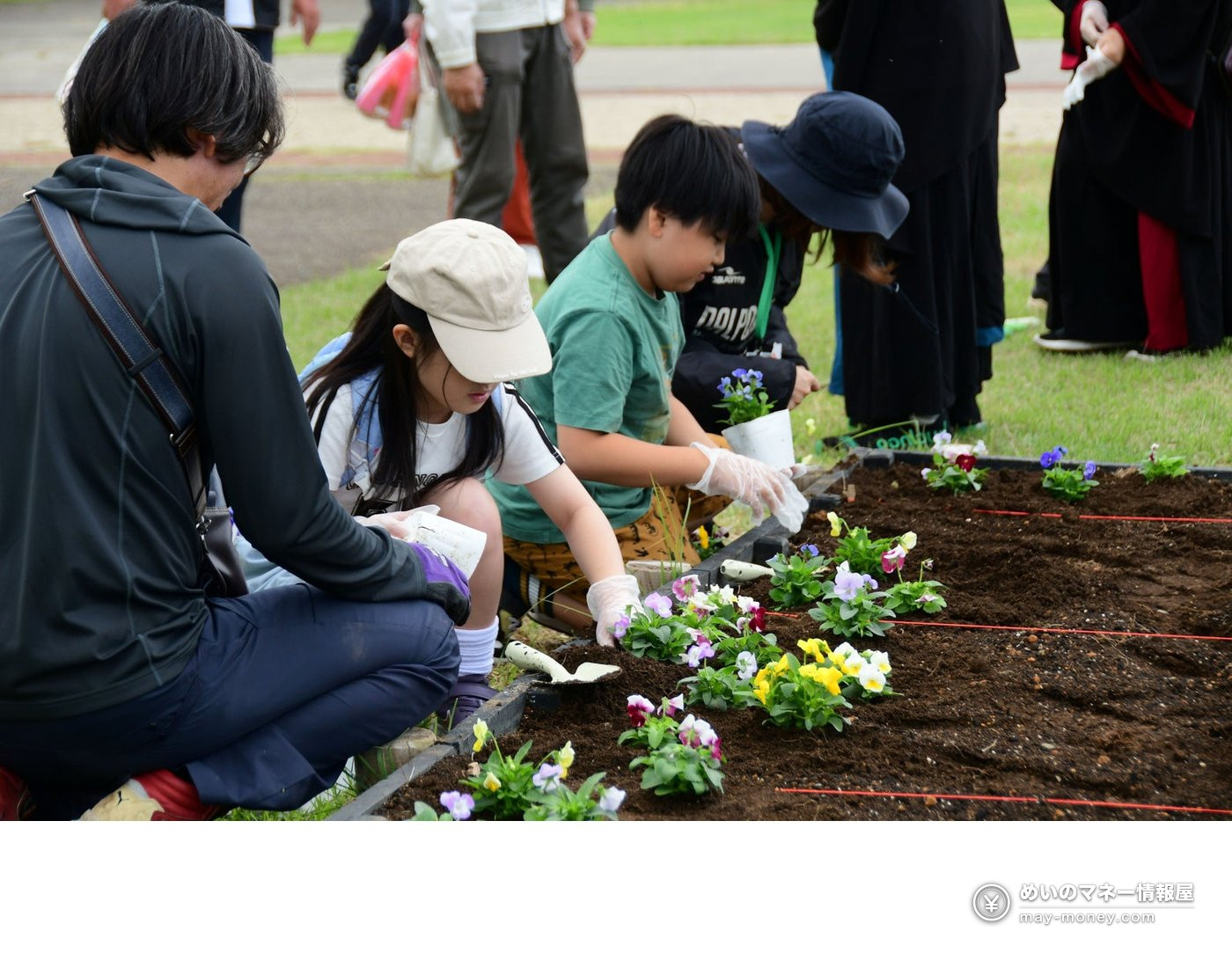
Photo: Koen Zaidan / Park Foundation (from the PR TIMES press release)
The pottery weekend on 17–18 October is the one to circle if you are already aiming at peak colour, since it lands squarely in the forecast window. Expect the hill and the craft stalls to be busy on the same day.
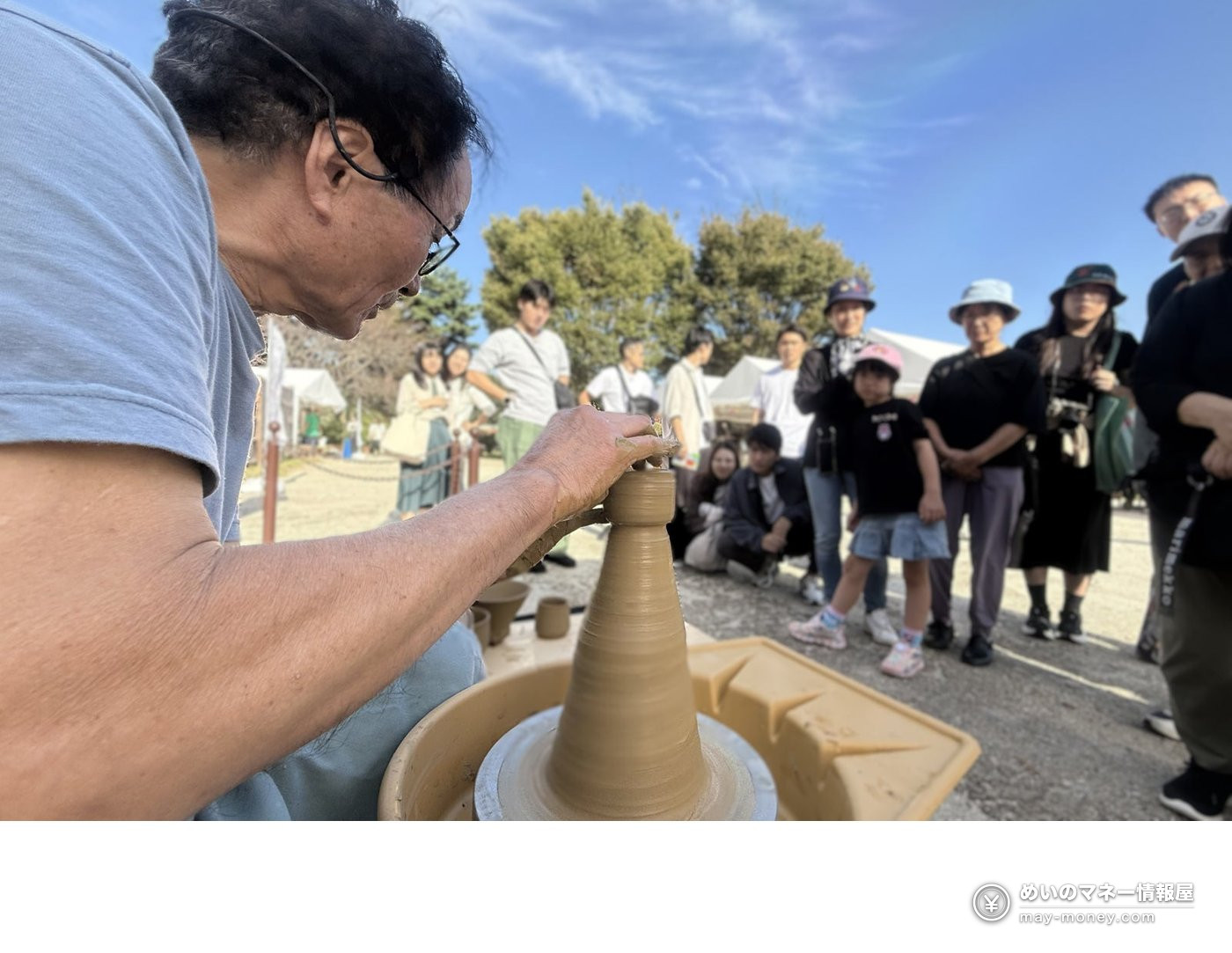
Photo: Koen Zaidan / Park Foundation (from the PR TIMES press release)
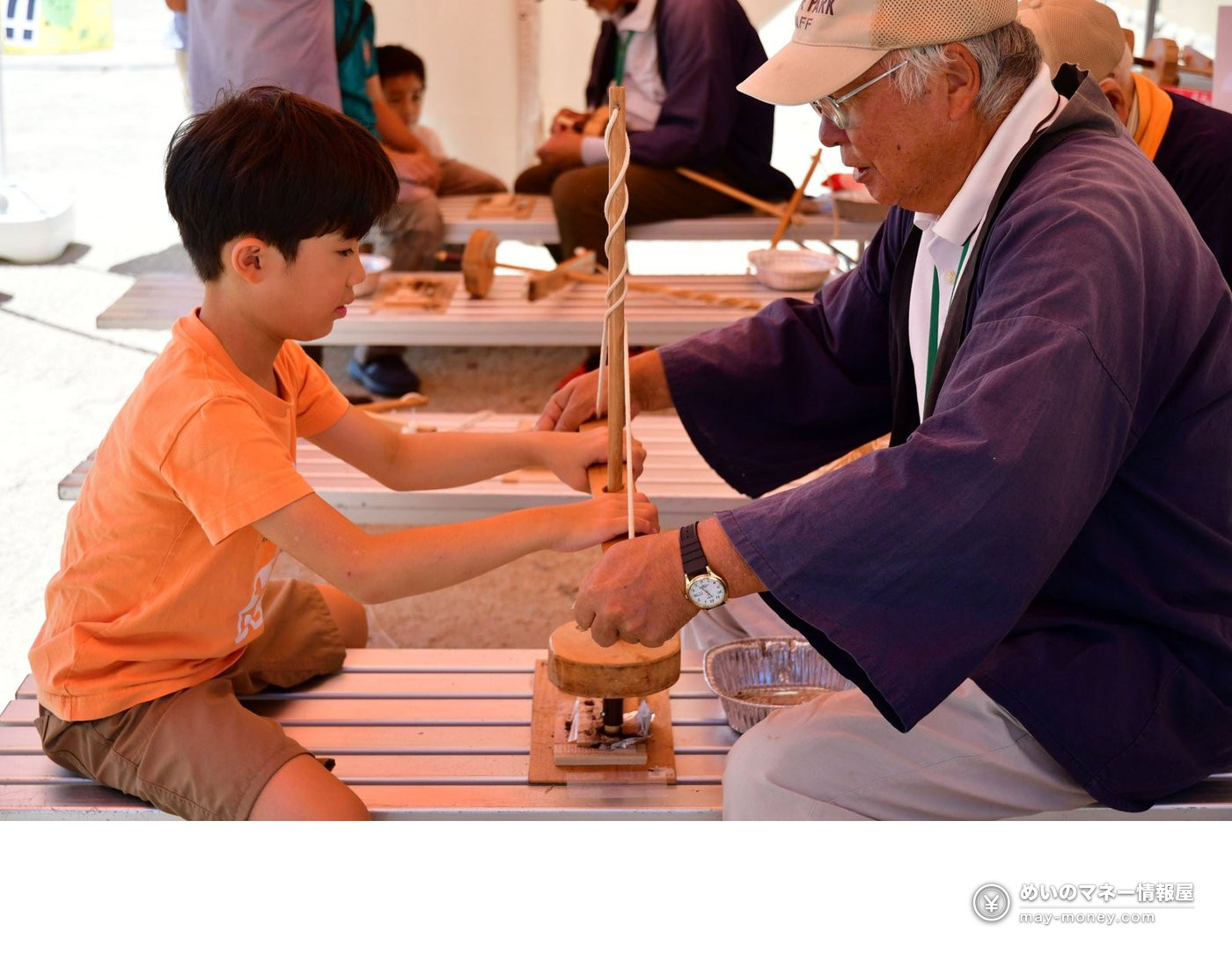
Photo: Koen Zaidan / Park Foundation (from the PR TIMES press release)
Kokia-themed food and drink
The park runs a short seasonal menu designed to be photographed next to the hill:
- Marukoro Kokia Soft — the round soft-serve that mimics the shape of a kokia bush.
- Kokia Latte — the kokia colours rendered with Ibaraki-grown matcha and strawberry.
- Kokia Blend — the park’s own original coffee blend.
Prices are not published in the announcement, so budget loosely and check at the stand.
Planning the trip
Hitachinaka is a realistic day trip from the Tokyo area, but the crowds in mid October are serious and the park is large — Miharashi Hill is only one part of a site that also holds a Ferris wheel, a small amusement area and barbecue grounds. A few things worth settling in advance:
- Go on a weekday if peak colour matters. The forecast peak is a 7–10 day window, so a Tuesday in the third week of October beats a Sunday in almost every way.
- Decide car or train early. Parking is 600 yen a day for a standard car, but the lots near the hill fill fastest on peak weekends. Check current access details on the official site.
- Bring exact change for your ticket. From 9 October the combined ticket is bought at the gate, so there is nothing to arrange online for general admission.
If you are travelling from further away, it is worth checking whether a rail discount is running before you buy a normal ticket. We keep separate guides to the Aki no Norihodai Pass for unlimited JR local trains and to JR East’s half-price Tokudane Special 28 shinkansen fares, both of which are aimed at exactly this kind of autumn trip. If you would rather stay overnight in Ibaraki and start early, the current Marriott Bonvoy points promotion for stays of two nights or more is worth registering for before you book. For a different autumn outing at a similar price point, there is also the 300 yen sento coupon covering 383 Tokyo bathhouses.
FAQ
- Q. When is the best time to see the red kokia?
- The park forecasts the start of colouring around 10 October and best viewing around 15 October, with the peak lasting roughly one week to ten days. Check the park’s colour report before fixing a date.
- Q. How much is admission during the carnival?
- Until 8 October it is 450 yen for adults, 210 yen for visitors aged 65 and over, and free for junior high school age and younger. From 9 October to 3 November a 350 yen seasonal fee applies, so adults pay 800 yen and seniors 560 yen, bought as one combined ticket at the gate.
- Q. Are there any free admission days?
- Yes. 21 September is free for visitors aged 65 and over, and 26 and 27 September are free for everyone. Parking is charged separately on all three days.
- Q. Is the park open every day during the carnival?
- The park is open every day of the period except 29 September. Hours are 9:30 to 17:00 until 31 October, then 9:30 to 16:30 from 1 to 3 November.
- Q. Does my ticket include the kokia light-up?
- No. A separate paid viewing ticket is required for the light-up held during the carnival, so check the official site for the details.
- Q. How much does parking cost?
- Per day it is 600 yen for a standard car, 300 yen for a motorcycle and 1,800 yen for a large vehicle.
Official information
- Hitachi Seaside Park official site
- Kokia colour forecast (official announcement)
- Seasonal fee period and ticketing (official announcement)
- Carnival press release
- Official Instagram / Official X
Enquiries: Hitachi Park Management Centre, 029-265-9001.