A slope of crimson, and this year you can see it after dark
3,000,000red spider lilies bloom along the Gongendo embankment. Entry is free, parking is free, and for the first time the flower area is lit up until 22:00.
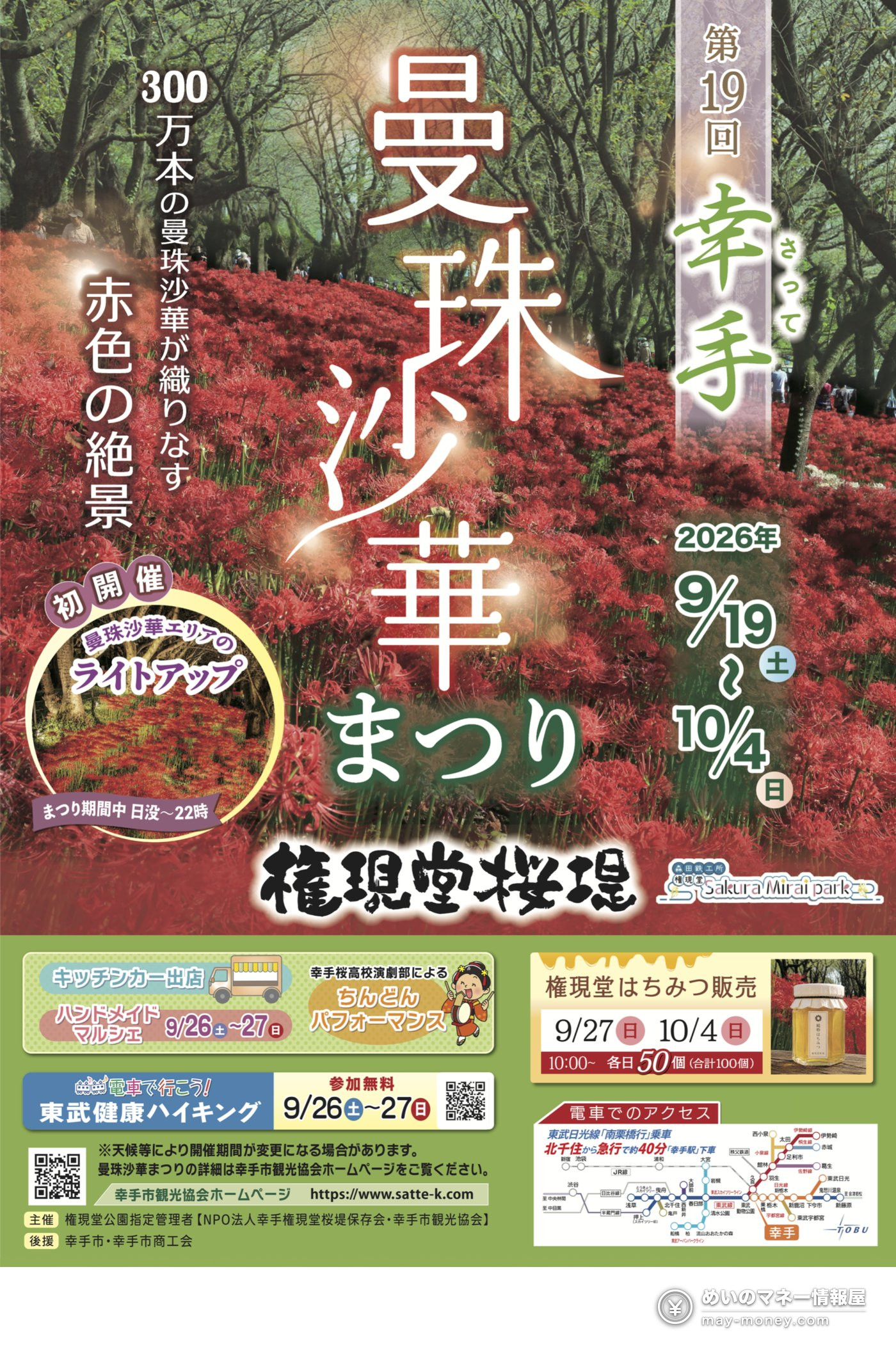
If you have lived in Japan through a September or two, you have probably seen these flowers on a rice-field path somewhere: thin crimson petals curling backwards on a bare stem, no leaves at all. They are higanbana, red spider lilies, and they appear almost overnight around the autumn equinox. The other name for them, manjushage (曼珠沙華), comes from Buddhist scripture, which is why so many festivals use that spelling.
The 19th Satte Manjushage Festival (第19回 幸手曼珠沙華まつり) runs from Saturday 19 September to Sunday 4 October 2026 on the Gongendo embankment in Satte City, Saitama. It costs nothing to get in, it is roughly an hour out of central Tokyo, and this year there is a reason to stay past sunset.
What you actually see there
Gongendo is an old river embankment, so the flowers are not on flat ground. They cover the slope, which means that from the footpath below you look up at a solid wall of red rather than down at a scattered field. About 3 million stems bloom there, and the official description of a deep-crimson carpet spreading across the slope is not marketing exaggeration so much as a fair description of the geometry.
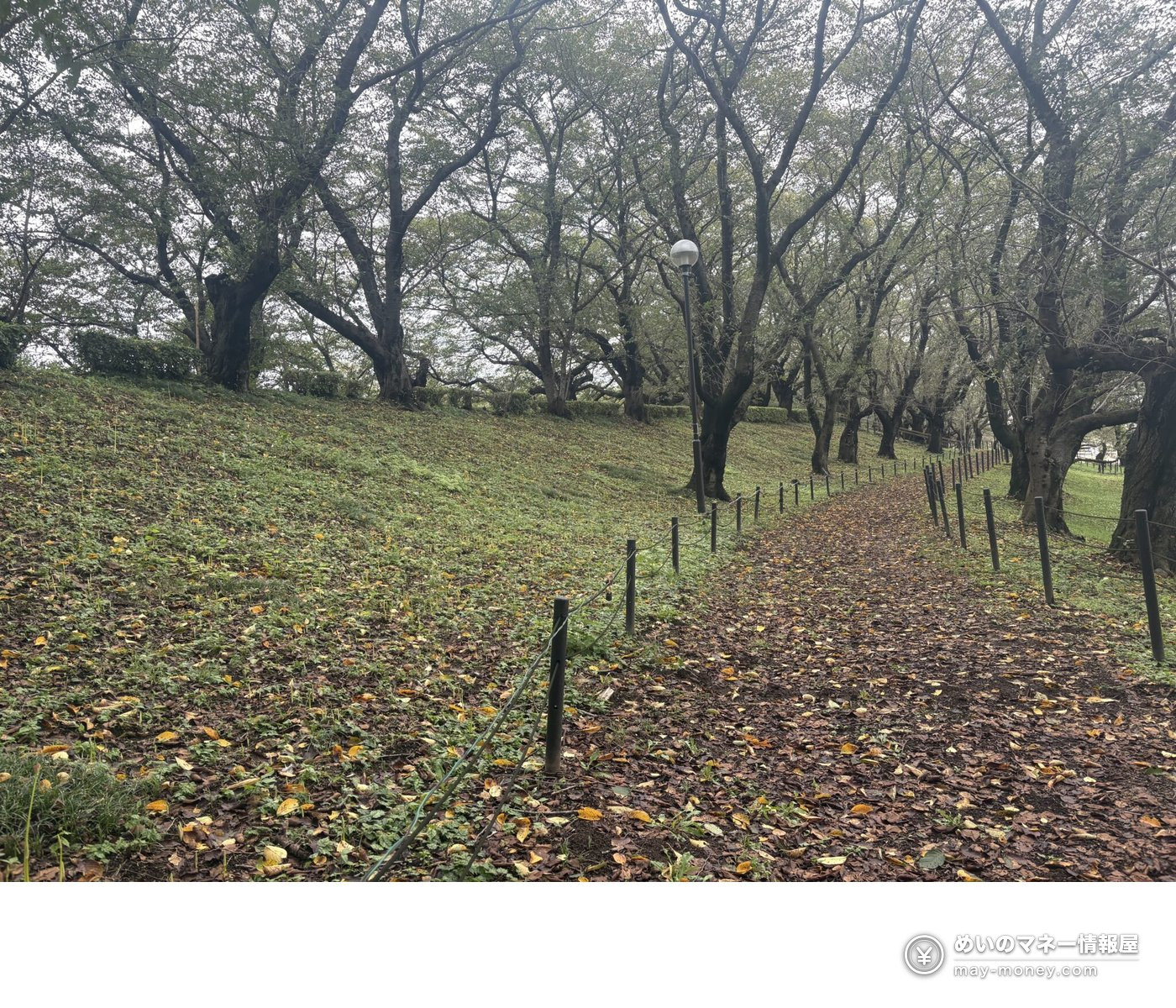
The site is better known for a different season. In spring the same embankment is a famous cherry blossom spot with a yellow band of rapeseed flowers underneath it, and through the year it also carries hydrangeas in the rainy season, sunflowers in summer, and daffodils in winter. The spider lilies are the autumn entry in that rotation, which is why the walkway you see in the photo below is lined with cherry trees rather than anything you came to photograph.
New for 2026: night illumination until 22:00
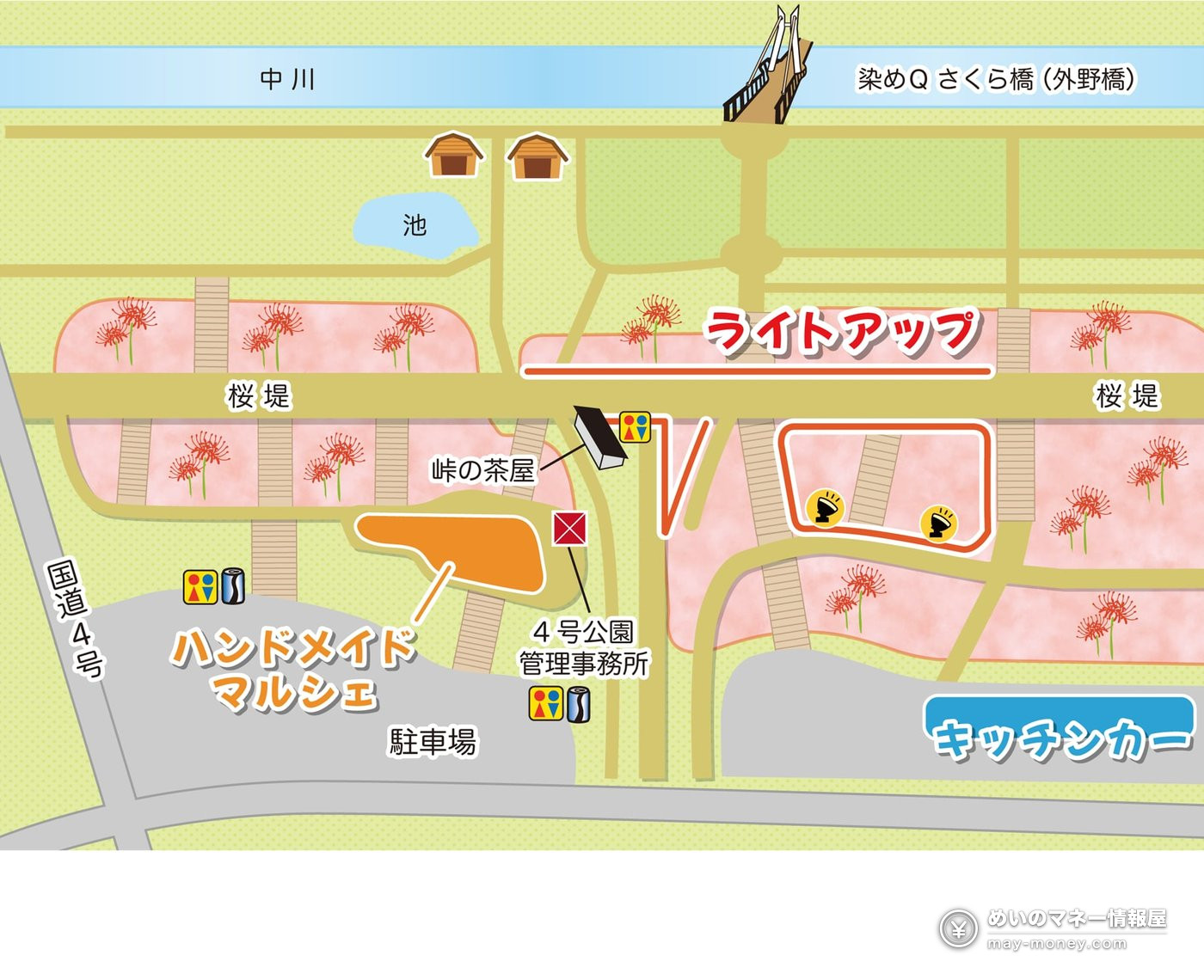
This is the first year the spider lily area is lit up at night. During the festival period, the footpath and the flower area are illuminated from sunset until 22:00, so the red comes out of the dark instead of sitting under daylight. Parking hours were extended to match: the car park is open 8:30 to 22:00.
Practically speaking, that turns a half-day trip into something you can do after work on a weekday, and it gives you two quite different photo sets from the same slope. Daytime gives you the scale of the thing; night gives you the colour against black.
Food trucks, a handmade market, and 100 jars of honey
Food trucks (kitchen cars) are on site throughout the whole festival period, so you are not dependent on finding a restaurant in town. Two extras are date-specific and worth planning around.
| What | When | Notes |
|---|---|---|
| Food trucks | Throughout the festival (19 Sept – 4 Oct) | Food and drink on site |
| Manjushage Marche (曼珠沙華マルシェ) | Sat 26 & Sun 27 Sept | Stalls centred on handmade goods |
| Limited honey sale | Sun 27 Sept and Sun 4 Oct, from 10:00 | Harvested from beehives inside Gongendo Park. 50 jars per day, 100 in total |
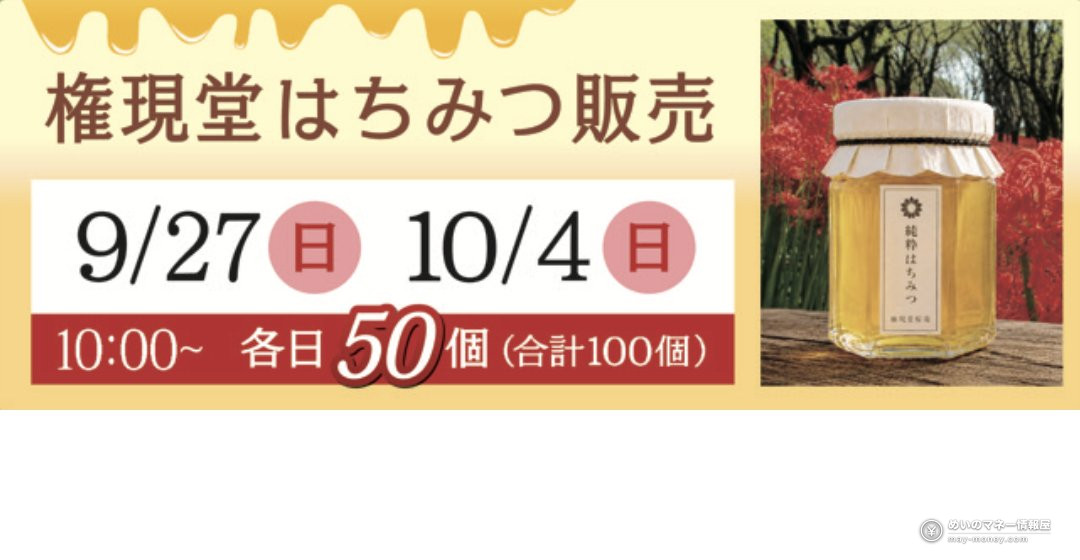
Fifty jars a day is a genuinely small number for a festival of this size. If the honey is the reason you are going, treat 10:00 as a queue time and not an arrival time.
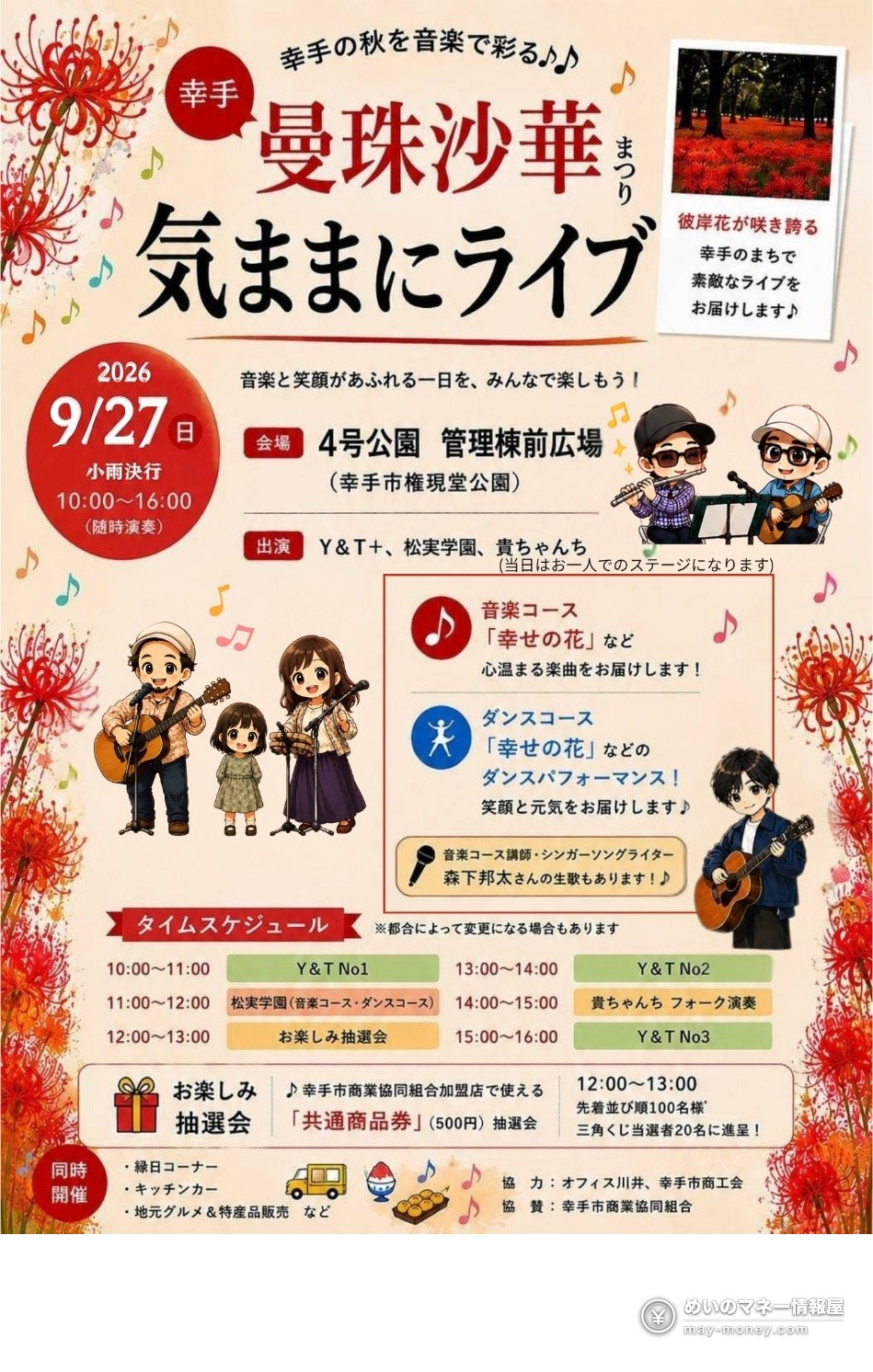
There is also a live music event advertised for Sunday 27 September, which lines up with the busiest day of the festival: the marche and the first honey sale fall on that same date.
Getting there from Tokyo
The venue sits at 887-3 Uchigoma, Satte City, Saitama. The nearest station is Satte on the Tobu Nikko Line.
| Method | Route |
|---|---|
| On foot | About 30 minutes (roughly 2.5 km) from Satte Station |
| Bus | From Satte Station, take the Asahi Bus bound for Goka-machi Yakuba and get off at Gongendo. 200 yen one way |
| By car | About 20 minutes from Kuki IC on the Tohoku Expressway, or about 10 minutes from Satte IC on the Ken-O Expressway |
| Parking | Free car park, open 8:30–22:00 |
A 2.5 km walk is fine in October weather and gives you a look at the town, but if you are carrying camera gear or travelling with children the 200 yen bus is the obvious choice. Note that a rural bus line will not run at Tokyo frequencies, so check the return timetable at the stop before you walk off towards the flowers, especially if you are staying for the illumination.
For the car park, the extended 22:00 closing is tied to the illumination. Free parking near a major flower site is unusual enough that it is worth factoring in if you are weighing train against car for a group.
The details at a glance
| Event | The 19th Satte Manjushage Festival (第19回 幸手曼珠沙華まつり) |
|---|---|
| Dates | Sat 19 September – Sun 4 October 2026 |
| Hours | No fixed hours |
| Venue | Saitama Prefectural Gongendo Park No. 4 (Gongendo Sakuratsutsumi). The official page lists it as Gongendo Sakuratsutsumi (Morita Tekkosho Gongendo Sakura Mirai Park) |
| Address | 887-3 Uchigoma, Satte City, Saitama |
| Entry | Free |
| Illumination | Footpath and spider lily area, sunset to 22:00, during the festival period |
| Official page | satte-k.com |
The festival period may change depending on flowering conditions. Confirm dates, times and any changes to the programme on the official page before travelling.
Planning tips before you go
- Pick your day by what is on, not just by the weather. Sunday 27 September stacks the marche, the honey sale and the live music together, which makes it the fullest day and also the most crowded one. A weekday visit gives you the slope more or less to yourself.
- Bring cash. Food trucks and handmade stalls at regional events often do not accept cards or QR payments, and there is no reliable way to know in advance which vendors will.
- Dress for an embankment. The flowers are on a slope beside a river, which means uneven footing and more wind than the forecast for the nearest city suggests. After dark in October the temperature drops noticeably.
- Stay on the paths. The whole appeal is an unbroken sheet of red, and it only stays unbroken if nobody walks into it. This matters more at night, when it is harder to see where the planting begins.
- If you are making a weekend of it, our guides to unlimited-ride JR passes for autumn travel and half-price shinkansen fares on the Tokudane Special cover how to keep transport costs cheap.
Free flower events are one of the easiest ways to have a real day out in Japan without spending much, and they pair well with the other cost-saving tips here. If you are looking at hotels for a longer trip around it, the current Marriott Bonvoy points promotion on multi-night stays is worth registering for before you book, and for everyday spending on train fares and food trucks the nanaco cashback methods at 7-Eleven are a simple place to start.
FAQ
- Q. Do I need a ticket or a reservation?
- No. Entry is free and the venue is described as open at any time. Parking is also free, with hours of 8:30 to 22:00.
- Q. When is the best time to go?
- The festival runs from 19 September to 4 October 2026, but red spider lilies have a short season and the organisers say the period may change depending on flowering. Check the official page close to your visit.
- Q. Can I see the flowers at night?
- Yes, and 2026 is the first year this is possible. The footpath and the spider lily area are lit from sunset until 22:00 during the festival period.
- Q. How do I get there without a car?
- Take the Tobu Nikko Line to Satte Station. From there it is about a 30 minute walk (roughly 2.5 km), or take the Asahi Bus bound for Goka-machi Yakuba and get off at Gongendo, 200 yen one way.
- Q. Is there food on site?
- Food trucks operate throughout the festival period. On 26 and 27 September there is also the Manjushage Marche with mainly handmade goods.
- Q. How do I get the limited honey?
- It is sold on Sunday 27 September and Sunday 4 October, starting at 10:00 each day, with 50 jars per day and 100 in total. Given those numbers, arrive well before 10:00.
- Q. What is the difference between manjushage and higanbana?
- They are two names for the same flower. Higanbana refers to the autumn equinox period when it blooms; manjushage is the name drawn from Buddhist scripture, and it is the one used in this festival’s title.